


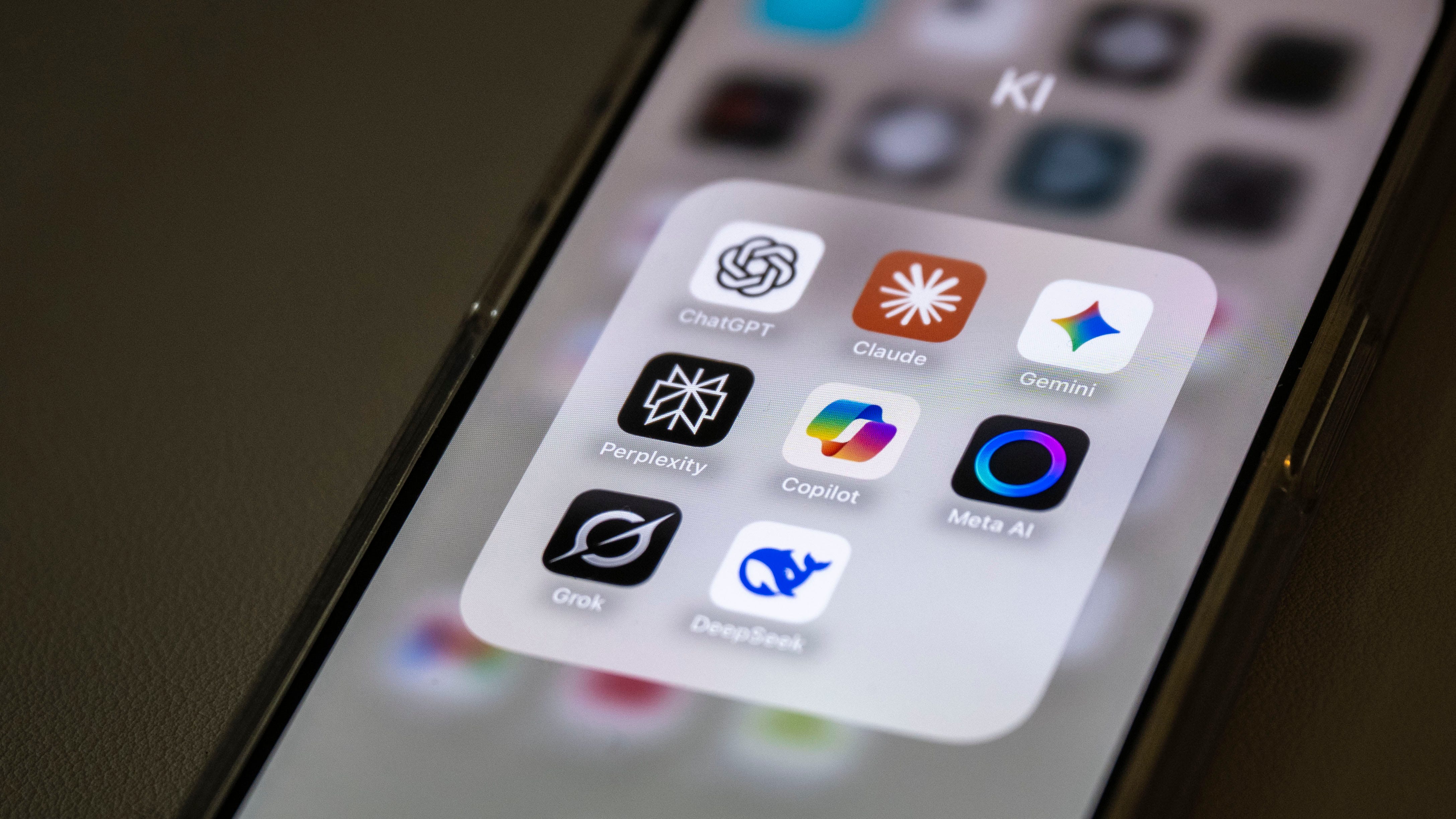
It’s Super Bowl week in health tech, also known as the J.P. Morgan Healthcare Conference, and the big AI labs did their part to ensure they’d be a big part of the conversation.
OpenAI introduced ChatGPT Health, a hub for consumers to connect to their medical records and wellness apps like Apple Health, and then OpenAI for Healthcare, an enterprise-facing suite of products for hospitals and health tech unicorns to use in HIPAA compliant ways. It also acquired a startup, Torch, for a reported $100 million.
Not to be outdone, Anthropic then unveiled Claude for Healthcare. At a launch event, CEO Dario Amodei and team detailed how its own ChatGPT rival, Claude, can be used by consumers and healthcare professionals, and how Anthropic can bring in industry data sources to help with new research.
“Our vision for Claude in healthcare and life sciences is as the universal connector,” Anthropic’s leader for those efforts, Eric Kauderer-Abrams, tells Upstarts. “This is an explicit part of our roadmap.”
Sometimes these announcements – competitive in their timing, pegged to an industry conference – are little more than throat-clearing; occasionally, they’re more like mini-extinction events, as swathes of startups see their roadmaps gobbled up by a bigger player.
These announcements aren’t seismic like that, but they do have implications for startups that are worth the wider ecosystem understanding at a high level.
Both companies seem to come in peace. One big winner in the blitz is Function Health, the personal health testing startup that got shout-outs from both AI lab giants, but others like Abridge, Ambience and EliseAI got called out by OpenAI, and HealthEx, Commure, and Viz.ai by Anthropic, among others.
It’s Alex’s birthday today! In lieu of gifts, please consider subscribing to our paid edition for 20% off 🎉
“We’re a part of this ecosystem. We’re not trying to displace people,” argues Kauderer-Abrams, who notes he previously cofounded three startups. “It takes a village to bring healthcare technologies to market, and we need each other to make this impact real.”
(OpenAI didn’t make an executive available for an interview, but provided a statement you can read below.)
At the same time, it’s inevitable that OpenAI and Anthropic will, as they have in other categories like coding, raise the bar for what startups will need to provide customers in both consumer and enterprise.
Our takeaways for startups – and what founders and anyone interested in how this market plays should keep any eye on moving forward, like an increase in M&A – below.
A MESSAGE FROM OUR SPONSOR
Reshaping health care

At UnitedHealth Group, we’re reshaping care with a new approach: Helping physicians focus on patients and prevention, instead of paperwork.
See how we’re helping patients live healthier lives with a new model for health care.
Take 1: These announcements are validating for the pros.
“Is this an ‘oh shit’ reset moment? I don’t think it’s that, at least for now,” says investor Sam Toole, a former manager at Nomad Health and now a partner at Primary Venture Partners. “I love to see they’re investing in it.”
Deena Shakir, a partner at Lux Capital who has been sharing impressions from JPM on LinkedIn, elaborates by email:
“The headline isn’t that healthcare is big, it’s that the AI labs are finally treating it as unavoidable. Health already is one of the heaviest, stickiest use cases for large models, especially on the consumer side. What’s new is the seriousness on the enterprise side.
The partnerships with health systems and pharma signal a recognition that healthcare doesn’t change through standalone tools. It changes when technology shows up inside existing institutions and earns the right to stay.”
Take 2: The obvious winners are wellness companies.
“It’s really a lift for the wellness, functional medicine, and longevity space,” says Christina Farr, cofounder of Scrub Capital and the author of the Second Opinion newsletter.
“What a lot of experts in our industry were thinking about is why there’s no care delivery partnerships, so you can get a medical consult, not just wellness information. It’s really a tailwind, though, for this wellness category.
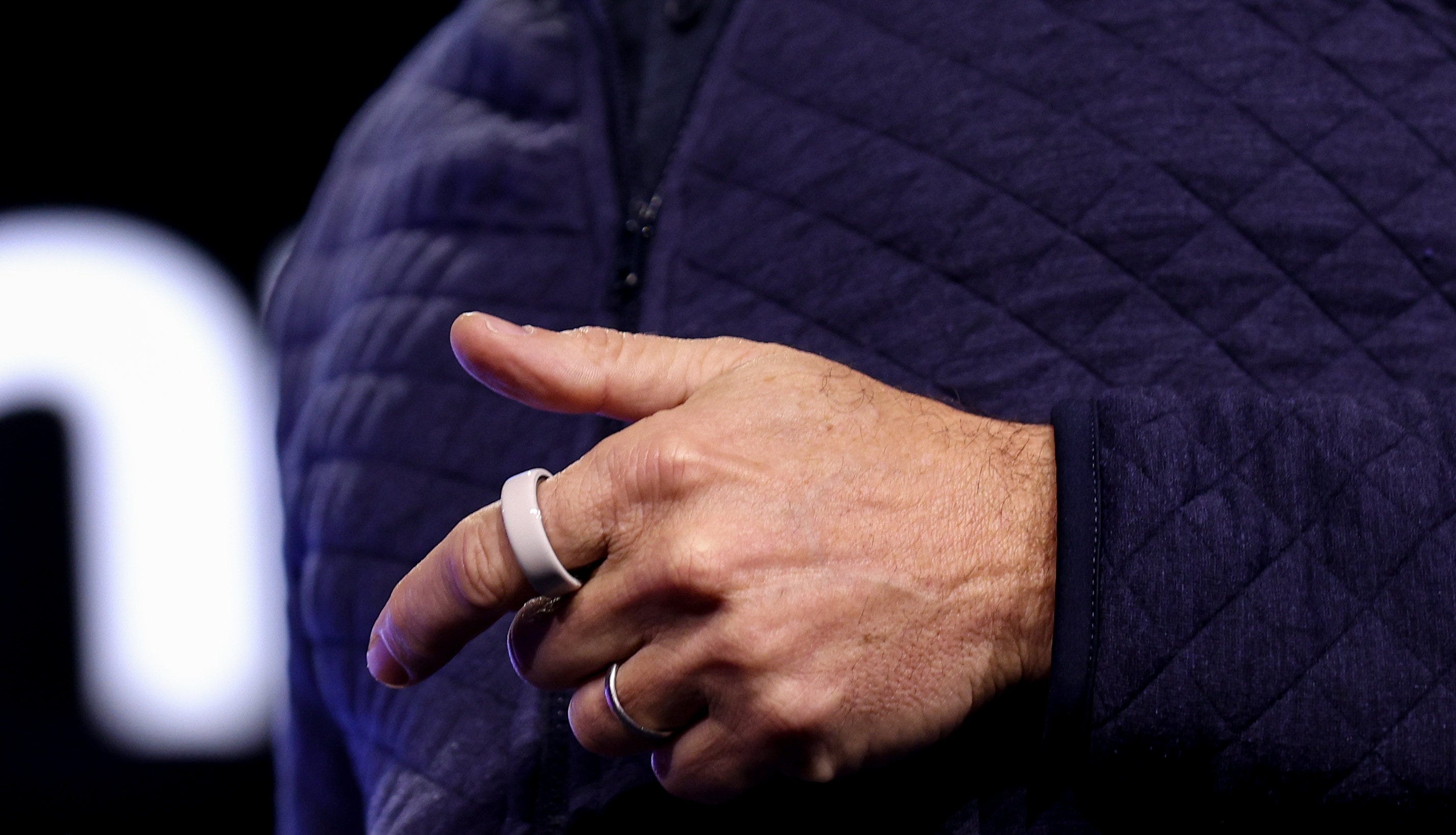
I’m probably happy if I’m Eight Sleep, Oura, Whoop, etc. because this really makes that information super useful and contextualized against other forms of health and wellness information.”
Take 3: The losers are startups that bundled health info for LLMs.
“The ‘what if OpenAI does this?’ hypothetical is now real,” says Shakir.
“Companies that were wrappers have been un-investable for a while, because it doesn’t feel like there’s real defensibility, and this just further validates that,” agrees Toole.
Good luck finding a startup that says it’s an at-risk wrapper of an AI model, though.
“If your solution is just automating a workflow, that’s at risk. Where a lot of the embedded, vertical, serious and venture-backed healthcare players are operating is much more than that,” says Tomorrow Health cofounder and CEO Vijay Kedar, who was in the room for Anthropic’s announcement as a launch partner.
Take 4: More competition is coming for unicorns soon.
On the enterprise side, doctors and researchers using Anthropic’s and OpenAI’s tools directly could battle more sophisticated B2B players for attention. Doximity and OpenEvidence are two unicorns mentioned by experts as potentially facing pressure.
At Anthropic, Kauderer-Abrams says as nicely as possible that Anthropic will both partner and compete, similar to how it does in other areas. “We’re trying to be relatively un-opinionated, and we’re working with partners that are in the product layer,” he says. “In addition to that, you’re starting to see us do our own product work and go vertical in the space.”
This week’s announcements are just the beginning there, he adds. “You can expect to see us release increasingly specialized products in the space. Our perspective is that we don’t want to reinvent the wheel. We’re looking for gaps, and places where we can uniquely feel a need that isn’t met today.”
Healthcare is a huge market, with global IT spend in the hundreds of billions, so it he’s believable when he says it won’t be winner-take-all. Still, it’s a warning.
“Everyone’s going to be looking around to see how that’s going to shake out,” says Vijay Pande, cofounder and managing partner of VZVC, and a board director at Function Health. “[This market] has become mature enough that it’s now more about getting the right go-to market and business side.”
Take 5: OpenAI is still associated with consumer and Anthropic with enterprise, like it or not.
Both AI labs were careful to note how much they operate in both consumer and enterprise here, but every single founder and expert who spoke to Upstarts still pegged OpenAI as more consumer.
Anthropic isn’t fighting that characterization. “I think it’s fair,” says Kauderer-Abrams. “We’re interested in both, but our focus is certainly on the enterprise side, and most of our energy is going into solving problems for large organizations, whether it’s health systems, payers, pharma companies or life science tools.”
But OpenAI doesn’t like it, despite the fact that it’s largely a victim of its own success there, with ChatGPT consumers asking 40 million health-related questions each day, the equivalent to 1 out of 20 of its 800 million weekly users posting an issue.
In a statement, an OpenAI spokesperson pushed back:
“Healthcare is one of the fastest-growing parts of our enterprise business. Our consumer adoption is accelerating this by driving real, bottom-up demand to use ChatGPT in hospitals, clinics, and health systems and our models in the platforms that power them. We’re excited to support this momentum with both OpenAI for Healthcare and ChatGPT Health.”
Most founders and investors we we pinged see OpenA’s efforts there as a work in progress at best, but Shakir at Lux partially agrees:
“I don’t think it’s that clean. I understand why people say it, but OpenAI’s enterprise healthcare work already includes health systems operating at real scale,” she writes. “Anthropic’s work feels earlier and more bio-pharma weighted right now, which shapes perception, but it’s still early.”

It’s important not to forget Apple, Google and possibly even Amazon in the mix. For some insiders, these announcements revive hopes from Google’s own ones many years ago.
“There’s a lot of people in healthcare excited, too, because Google had this whole thing back in the day called Google Health that did not work,” says Farr. “And a lot of those people are now very excited to see contextual health search (finally!).”
Take 6: More competition means more M&A.
“The big question in my mind is: who will win the various competitions in AI drug design and healthcare delivery?” says Pande. “That battle is just starting.”
Pande, who previously spent about a decade at a16z helping to lead its investments in the category, expects the acquisition of Torch – while not a massive outcome for its founders or investors – to prove the first of a string of such purchases over the next year.
“I think OpenAI, but maybe both of them, will do a fair bit more, because it will allow them to basically dominate in verticals,” he argues.
Take 7: The interface is up for grabs.
Startups won’t really have a choice but to connect their data to the big AI labs, experts say, for two reasons: walling off won’t work, and it’s already happening.
That means that if you’re Oura sending notifications about sleep cycles, or other health tracker apps, you probably need to accept that your customers will increasingly access and play with that data in someone else’s service, like Claude or ChatGPT, outside of yours.
“I would put my money on the consumer healthcare aspect and that central nervous system being owned by one of the big labs, versus a startup company,” says Toole at Primary, although he notes that more integration work is needed to fully realize a one-stop destination.
Shakir at Lux is a bit more sanguine. “I don’t see a single, universal health interface emerging. Healthcare doesn’t consolidate that way (though may have tried!),” she writes. “But these tools are already becoming the place people go to make sense of their data.”
Pande agrees that consumers may prefer not to have too much context in one place. “At least for now, people are treating agents like we treat human beings,” says Pande. “If you use one LLM for everything, the context starts getting a little awkward.”
Take 8: Startups should take advantage while they can
Opportunities should remain for startups to build AI agents to stand in for certain human roles right now, from low-level physician visits to second opinions. “At least for now, people are treating agents like we treat human beings,” says Pande. “If you use one LLM for everything, the context starts getting a little awkward.”
In the meantime, health tech startups would be wise to emulate Kedar in leveraging the race between Anthropic and OpenAI for more early model access and direct support.
Tomorrow Health has chatted with Anthropic about everything from which models to use for particular use cases, to how to more efficiently use compute, its CEO says.
Anthropic’s Kauderer-Abrams has a similar message for startups: if you’re not sure whether to trust the lab as friend or foe, talk to his team, he says.
“We’re very transparent with our partners, and we can share notes on roadmaps and where we see opportunities and needs,” he says. His advice to make the most of – and stay ahead of – labs like his own in a given niche: “You have to have crystal clarity on exactly the problem you’re solving, and then you have to execute with top speed.”

Healthcare isn't easy - ask Oracle/Cerner. But this could be interesting and I'm willing to test it out ... if ChatGPT for Health could connect with my medical records.
Healthcare will be a vertical where Google will be a major player. Many seem to ignore how much it already brings to the table — Isomorphic Labs (drug discovery), AlphaFold, Fitbit data, MedGemma, Gemini’s leading multimodal capabilities (useful for analyzing scans, procedure videos), devices that can track one’s wellness, etc