



The Upshot
In the early days of her startup, Ambrook, CEO Mackenzie Burnett and a small team would hop on a plane – then often take a bumpy drive – to personally onboard rural customers of her financial software business.
Even then, Burnett says her vision was to help out across the “real economy,” streamlining bookkeeping and expenses for small businesses that grow, raise, or build and move along physical goods. But she expected Ambrook to focus on agriculture for years.
So Burnett was surprised when, as Ambrook wrapped up a visit to set up their second customer, a cattle feeder operation in Arizona, the husband-and-wife owners told her they were ready for Ambrook to set up their other businesses – all four of them, none of them in farming.
Trucking and custom goods and services weren’t on the immediate roadmap. But a lightbulb went off.
“That was the very early realization that what we had built was something that was much bigger,” Burnett tells Upstarts.
Today, most of Ambrook’s 8,000-plus business customers – up from 2,500 a year ago – are still mostly in agriculture. But more than 1,000 trucking businesses now use Ambrook, as well as hundreds of general contractors and property managers. They turn to Ambrook for help with receipts and bill paying, cash management, and record-keeping for compliance and tax audits.
Often, they’re replacing QuickBooks, the accounting software platform developed by Intuit more than 30 years ago. But at least half of Ambrook’s customers turn to it as their first software vendor, according to Burnett.
“Really big, multi-million dollar businesses run on paper in America still, and I don’t think people realize that,” she says.
Now, the startup she co-founded with Dan Schlosser and Jeff Anders in 2020 is ready to expand: both up-market into bigger ‘ag’ businesses and farms, as well as into those other categories like construction, logistics and real estate.
To do so, Ambrook has raised $30 million in a Series B funding round led by solo capitalist Lachy Groom, Upstarts exclusively reports. Thomson Reuters Ventures, Thrive Capital, Field Ventures, and Cameron Ventures all participated, alongside angel checks from co-founders of Gusto, Notion and Vercel.
The mission – to help American businesses be more profitable and sustainable – hasn’t changed, Burnett tells me in a visit to the startup’s New York office in July. The space is filled with plants and mismatched vintage wooden furniture, much of it sourced from Facebook Marketplace; employees leave shoes at the door, partly to preserve its wooden floors.
(In a major faux pas, I don’t make that connection until I’m leaving, as Burnett hands me a copy of Ambrook’s print gazette, The Tomato Times, which I open to a guide matching tomato varietals to astrological signs.)
Offices in San Francisco and Denver maintain the Americana motif. But don’t be fooled by such folksy charm, or Ambrook’s Stetson-heavy Instagram page. What the startup is building for these businesses gets high-tech.
One customer in Vermont tells Upstarts how he’s incorporated Ambrook’s recently-launched MCP server into an AI assistant to reconcile errors in his farm’s ledgers (more on that below). A hunting range in Texas built its own point-of-sale system on top of Ambrook’s software to manage bookings, Burnett adds.
“Farmers are the original DIYers, for sure,” she says, referring to ‘do-it-yourself’ fixes. “We’re the one thing that our customers don’t want to roll out on their own.”
Here at Upstarts, we pride ourselves on the depth and care that goes into our startup reporting. Interested in aligning your brand with stories like this? Drop us a line at partnerships@upstartsmedia.com 👋
Rivers of paper
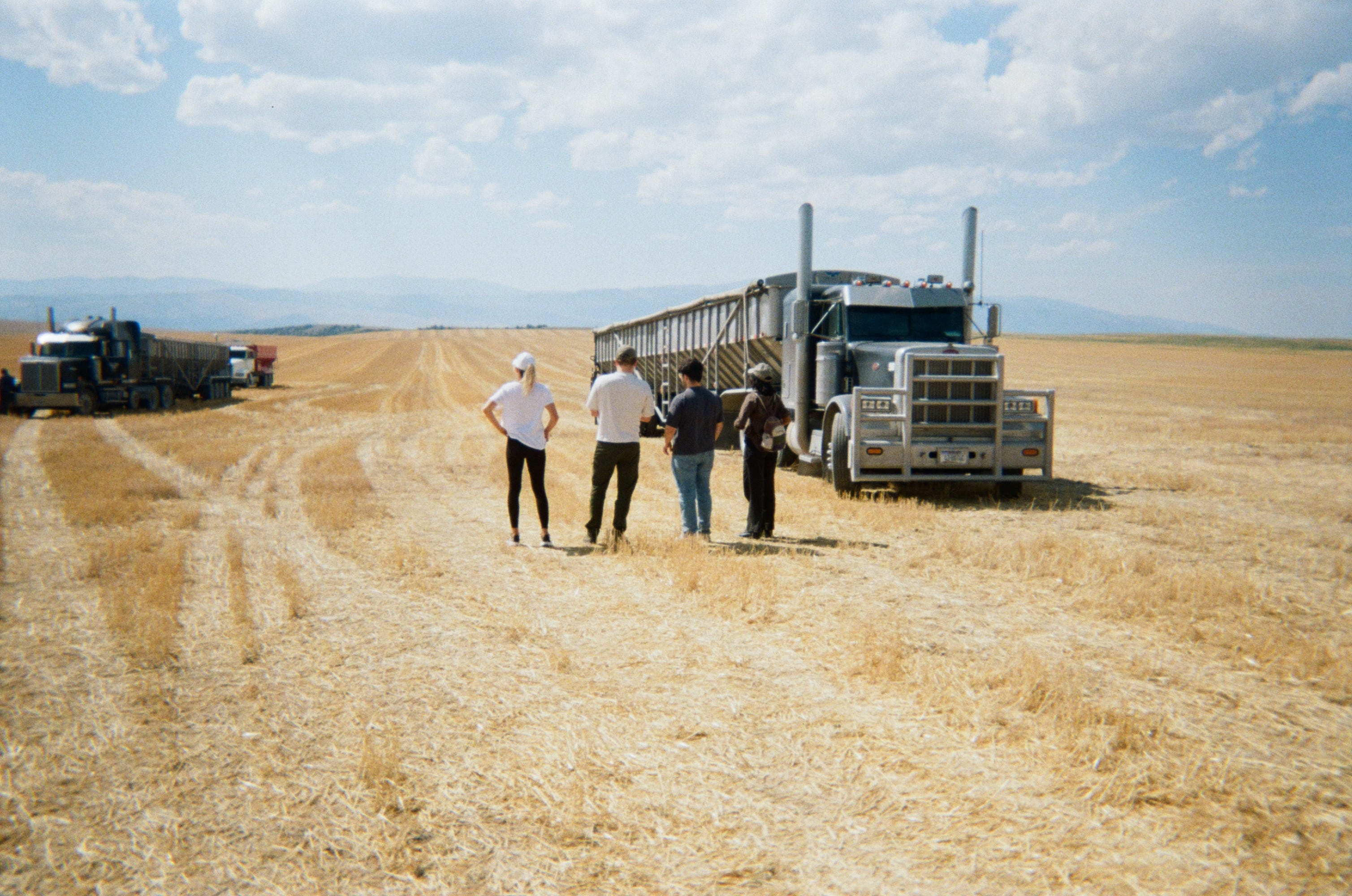
One of Ambrook’s employees jokes that the company should be called “Brackish water,” Burnett says, because of how it combines more traditional startup tech jobs in New York and the Bay Area with commercial team members in rural Montana.
The original idea, and name inspiration, for Ambrook came about after Burnett spent a summer meeting with farmers about water access in California’s Central Valley in 2018. After co-founding and selling her first startup to CoreOS, earning her a place on Forbes’ 30 Under 30 list, she left to pursue a master’s degree at Stanford University, studying the Pentagon’s response to climate change.
But after teaming up with Schlosser, a former product manager at Google and The New York Times, and Anders, a former designer at Meta who then served as Head of Design at Scale AI, Burnett discovered that water infrastructure in the U.S. was too convoluted to support a private actor marketplace on top, she told the Future of Agriculture podcast last year.
Speaking with dozens of farmers and policymakers in agriculture, a more classic startup problem emerged. “People were just kind of drowning in paperwork,” she said then.
In startup terms, Ambrook had found a classic wedge: a customer category too wonky, or niche, for the incumbent player – QuickBooks – to have built a tailored product. Farms file different taxes from other businesses; they deal with a much wider range of expenses and bills.
“They’re one of the only businesses where your inventory gets born, it grows, it dies,” Burnett described it on another podcast, Dialectic, also last year.
Ambrook spent several years working hands-on with early test users to develop its answer. When it launched, the startup invested in educational courses and a certification process to help ensure onboarding was relatively smooth. Employees went on small, local podcasts and radio shows to spread the word, appeared at universities and meetups, and engaged with industry Facebook groups.
“We wanted to be really, really sure that our product was going to hit when it did, because of the structural challenges of selling to a market like that,” Burnett says now.
One of those early customers was Brandon Bless, the land and animal manager at Bread & Butter Farm outside Burlington, VT. A 650-acre community farm that grows vegetables, tree fruits and berries, raises cattle and other animals, and engages in agroforestry, Bread & Butter is a complex operation, Bless says, that flexes up from six full-time staff year-round to about 50 team members in its summer peak.
“It’s about building tools for folks who want to do the right thing, and making it easy to do the right thing.”
Much of that complexity comes from the fact that, like other farms, Bread & Butter operates six independent, but interconnected businesses on its premises – not just including the education program, CSA and cafe you might expect, but a non-profit and ventures in health and music, too. Each maintains its own profit-and-loss accounts, and QuickBooks broke all the time managing them.
After finding Ambrook online, Bless agreed to try it after the startup promised ‘white glove’ onboarding it would unwind back to QuickBooks if it couldn’t deliver. Sure enough, Ambrook’s team came to stay at the farm, where employees met with Bless and his co-workers to spin up features from inside the room.
Bread & Butter now uses Ambrook across five of its businesses, saving it hours each week in bill-paying and bookkeeping, and giving it more confidence about its margins for decision-making. Bless personally connects Ambrook to Anthropic’s Claude via its MCP server to manage bookkeeping, lessening the need to hire third-party services.
“We’re saving a huge amount of money because of Ambrook and the AI integration,” he says.
Tilling new soil

Ambrook has resonated with farms that bring in up to about $20 million in sales, Burnett says; to move into mid-market, bigger farms, it will need to flesh out its payroll and operations features. The startup is also developing a services function (a trend we’ve written about extensively at Upstarts), and is hiring for that role.
But it’s in other categories adjacent to agriculture where Ambrook can likely expand the fastest: businesses like contracting, trucking and real estate where farmers like the Arizona couple have already tried to pull them in.
Copywriter turned general contractor Zach Slovin tells Upstarts that he’s a little embarrassed that, despite his advertising background, he found Ambrook through a Facebook ad.
The owner of his own home renovation business, Home Reflections LLC, Slovin says that he deliberately keeps a lowkey tech presence on job sites, bringing just a clipboard and his smartphone, so as not to seem too corporate to trust. (You will, however, find him active on TikTok.)
And Slovin says he turns down outreach from companies trying to sell him AI tools on a seemingly daily basis. Ambrook, because it was replacing the QuickBooks “behemoth,” was different. Since reaching out in December, Slovin now uses Ambrook to pay bills to subcontractors faster, and to better keep track of his projects by category, budget and scope. He’s also surprised himself by using its more recently-launched project estimate tools.
“It’s not that I have specific brand loyalty to any one product,” he says. “But it feels like as long as they’re doing things in the way they’re doing now, and moving in a positive direction, I can’t see any reason I would move away from them.”
One looming challenge for Ambrook: Both customers who spoke to Upstarts said that the startup’s customer service, including quick response times and the ability to fix bugs in hours and ship features in days, have helped earn their loyalty. That high-touch service is tough to scale. Ambrook’s now hiring customer success managers following its fundraise, too, per the jobs board on the back page of The Tomato Times.
Is there more to Ambrook’s moat than that? What happens if QuickBooks wakes up to a market segment slipping through the cracks, a team in Y Combinator hones in on the same idea, or Anthropic and OpenAI move deeper into SMB bookkeeping?
“AI has made every business more honest about where their real network effects are,” Burnett responds. The moat isn’t a headstart in building software, she argues, but in economies of scale, network effects and proprietary data like the tens of thousands of receipts regularly uploaded to Ambrook.
Burnett brings an “authenticity” and “reverence” for her customers that founders can’t fake, says Ambrook’s Series B investor, Groom. The co-founder of robotics AI startup Physical Intelligence, or PI, Groom adds that he and Burnett also share an appreciation for the physical world.
“Everything around us was built by someone that poured blood, sweat and tears into it,” he adds.
True long-term resilience, Burnett argues, comes from helping those people find financial stability, such as putting their kids through college. Only then can they prioritize longer-term goals, such as environmental conservation, without going against their own interests.
“It’s about building tools for folks who want to do the right thing, and making it easy to do the right thing,” she says.
“For us, this is ‘American Dynamism’ in a way that actually empowers people – the millions of people who are in the position that, if they were given the chance, would feel sensible ownership around stewardship, but just haven’t been asked.”
their ambition, care, talent, and motivation are off the charts