


The Upshot
On an afternoon in late March, weeks before the Knicks will captivate the city with a historic title run, the best place to be in New York tech is a low-key office space in Chinatown.
Past a front door that doesn’t lock, and up a somewhat sketchy elevator, a group of eight companies are presenting to a few dozen people in the loft-style office of Gutter Capital, a local venture capital firm.
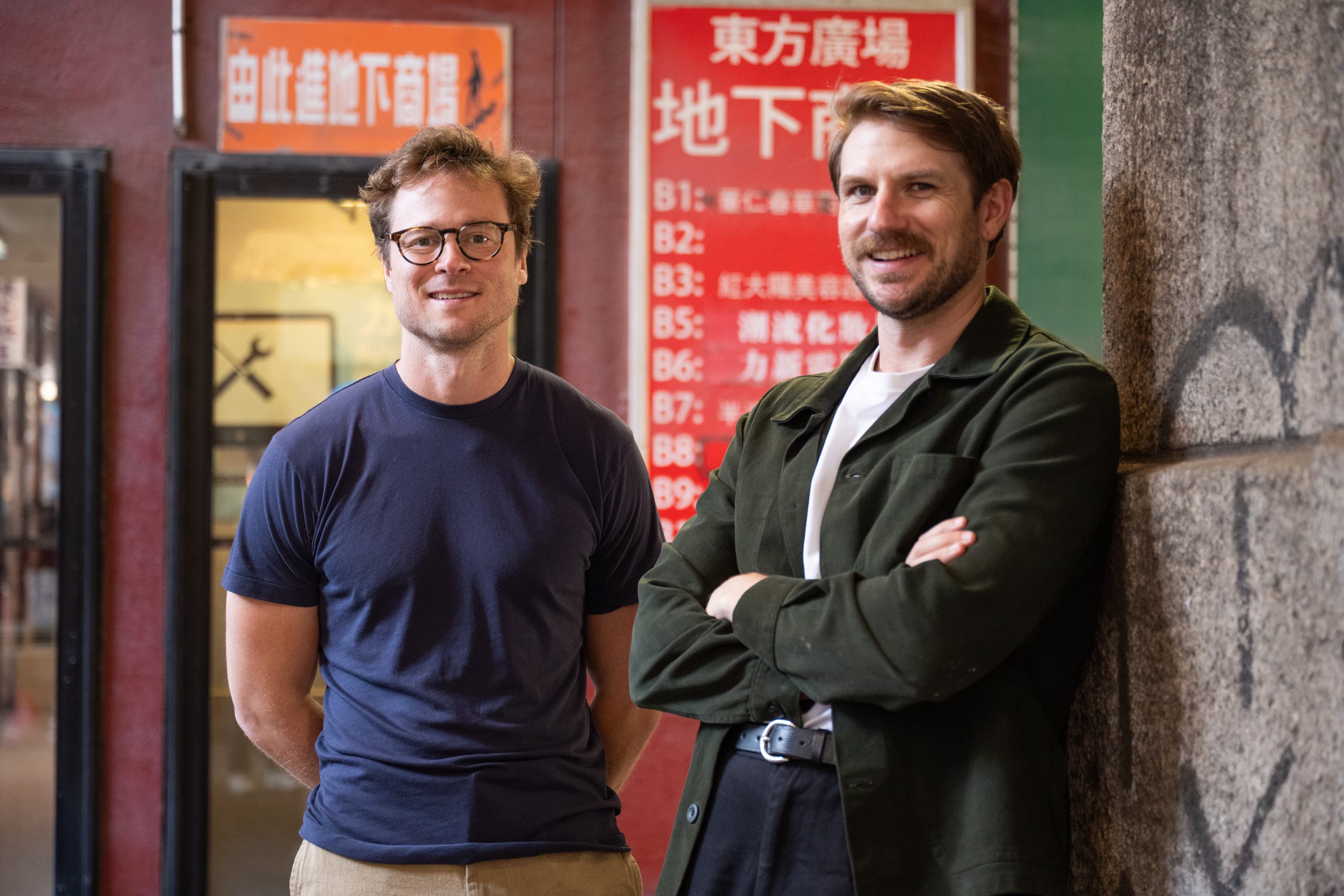
It’s the first-ever demo day at Elbow Grease, the early-stage accelerator created by Gutter late last year. In front of a portable screen, the participants present their products to rows of a few dozen fellow founders, program mentors and speakers, closely watched and guided along by Gutter’s founding partners, Dan Teran and James Gettinger.
There are jokes. “Please form a line at the back of the room to sign up for your policy,” declares the co-founder of a startup helping small businesses find insurance, to laughter. There’s plenty of lukewarm pizza.
What there isn’t: the gaggle of tech press and investors you’d expect at a startup demo day. These pitches are for feedback, not buzz. “This is the same deck we used to pitch the U.S. Space Force,” notes the team behind Galileo Space, who are working on cheaper, better low-orbit satellite imagery.
“We’re not a finishing school to teach you how to fundraise,” says Gettinger. “We want to do this with you, and for things to go well, for decades.”
It’s a promise that Gutter is putting its money – and staking its future – behind. The firm is announcing the close of its $75 million Fund III today, up from Gutter’s previous fund sizes of $25 million and $44 million.
The new fund will focus on Elbow Grease, both through new batches and capital for follow-on rounds, Teran says. As part of the announcement, Gutter is also officially opening up applications for the program’s second batch.
Elbow Grease 2 is seeking 12 to 15 early-stage startups for its upcoming batch. Startups can apply here through July 31.
For a program that was framed as an experiment last October, it’s a big step forward, with commensurate risk attached.
“We just feel Elbow is the logical entry point,” says Teran, who previously built and sold local startup Managed By Q. “The earlier we can get involved, the bigger impact we can make for companies.”
Note: Gutter Capital didn’t compensate us in any way for our reporting on this project. We put in the extra work purely out of journalistic curiosity, and our mandate to write trustworthy, fun unique reporting on the startup ecosystem.
We hope you’ll subscribe to support our work. You can take 15% off an annual subscription here.
What’s in the juice at Elbow Grease to create such momentum, so fast?
At Teran’s invitation, Upstarts embedded exclusively with Elbow Grease to sample its programming, including a happy hour, founder lunch training session, fireside chat, museum outing and Demo Day, between January and March. (We skipped the Nets game, but can wave from the Knicks parade later this week.)
We also checked in repeatedly with a few of the founders about their experience over the period, and asked visiting speakers like Stripe veteran Claire Hughes Johnson and CEO mentors like Electric founder Ryan Denehy for their feedback.
The portrait that emerges: a low-ego, even wholesome startup program where an eclectic mix of founders become New Yorkers, at least for a few months.
That sleeves-rolled-up ethos, encouraged by Elbow Grease’s name, is set by Teran and Gettinger, co-founder of web app Givlet and later a professional poker and daily fantasy sports player. They lean hard into their networks and experience – and they leverage themselves, and their firm, in a high-conviction bet that means long hours and low pay, at least for now.
“The reality is that James and I barely pay ourselves, and we work 80 hours a week as seasoned hands,” Teran says. “The biggest risk to the whole thing is our capacity… We’re offering a lot of service on a pretty lean budget.”
But for all the feel-good energy out of Elbow Grease, it’s a highly capitalistic operation. This is increasingly what it takes to get ownership in high-potential startups, Gutter’s partners argue; get it right, and big paydays await all involved (including their portfolio founders, cut into the firm’s profits).
“We’re in it to the hilt, very much betting on it,” adds Teran. “We have a love of the game, and I think long-term we will outperform every fund of our size.”
A MESSAGE FROM OUR SPONSOR
The modern ACH playbook

ACH remains the backbone of recurring and subscription payments for growing businesses — but outdated systems lead to increased friction, failed transactions and unnecessary costs.
Get the insights and learn how modern ACH helps payment leaders drive up to 15% higher conversion and 40% fewer returns.
‘No crazy egos’
When Teran and Gettinger announced Elbow Grease last October via Medium post, they weren’t sure how many applications they’d receive, or of what quality. They got more than 600.
One was Galileo Space, where CEO Kazi Farabi and team brought backgrounds at Lockheed Martin, SpaceX and Google to bear on a solution to take cheaper, better image sensing via a low orbit satellite.
With ties to USC and the famed NASA JPL center, Galileo had received encouragement from Y Combinator to apply to its next cohort, but Elbow Grease committed faster: move to New York for eight weeks, and receive $300,000 for 9% ownership (implying a $3.3 million valuation) rolling into a future funding round.
The Galileo team knew literal rocket science, but not much about investor pitch decks. Gutter paired them with Denehy, a longtime peer of Teran’s and LP in Gutter’s funds. Denehy didn’t know much about space, but he did know about launch timelines and capital raising, with Electric valued at $1 billion across a handful of rounds.
“It’s training us, getting us ready to be customer facing and raising more capital,” Farabi told me when we first met in January. “They were the first believer, the first check that matters,” he tells me at Demo Day in March.
When Denehy met the wider batch, he claims he could spot a ‘through line’ across the companies: “No crazy egos.” “There was a vibe with everybody, where I was like, ‘this all makes sense,’” he says.
Elbow Grease’s full first batch:
AI played a big role in shaping Elbow Grease’s curriculum, but not for the reasons you might expect. In many accelerators, startups spend the program looking to ship and validate a minimum viable product, or MVP, readying it to a point to pitch to investors by demo day.
In Elbow Grease, founders mostly knew how to use the various vibe-coding and agentic tools already in the market from companies like Anthropic and OpenAI; they could ship a product in a matter of days, notes Gettinger. Programming and workshops instead oriented around recruiting, sales and other aspects of company building.
Guest speakers included Lotus co-founder Mitch Kapor, Notion’s head of design, and Teran’s pal from after he sold his startup to WeWork (an eventually turbulent era we covered while at Forbes), WeWork co-founder Miguel McKelvey.
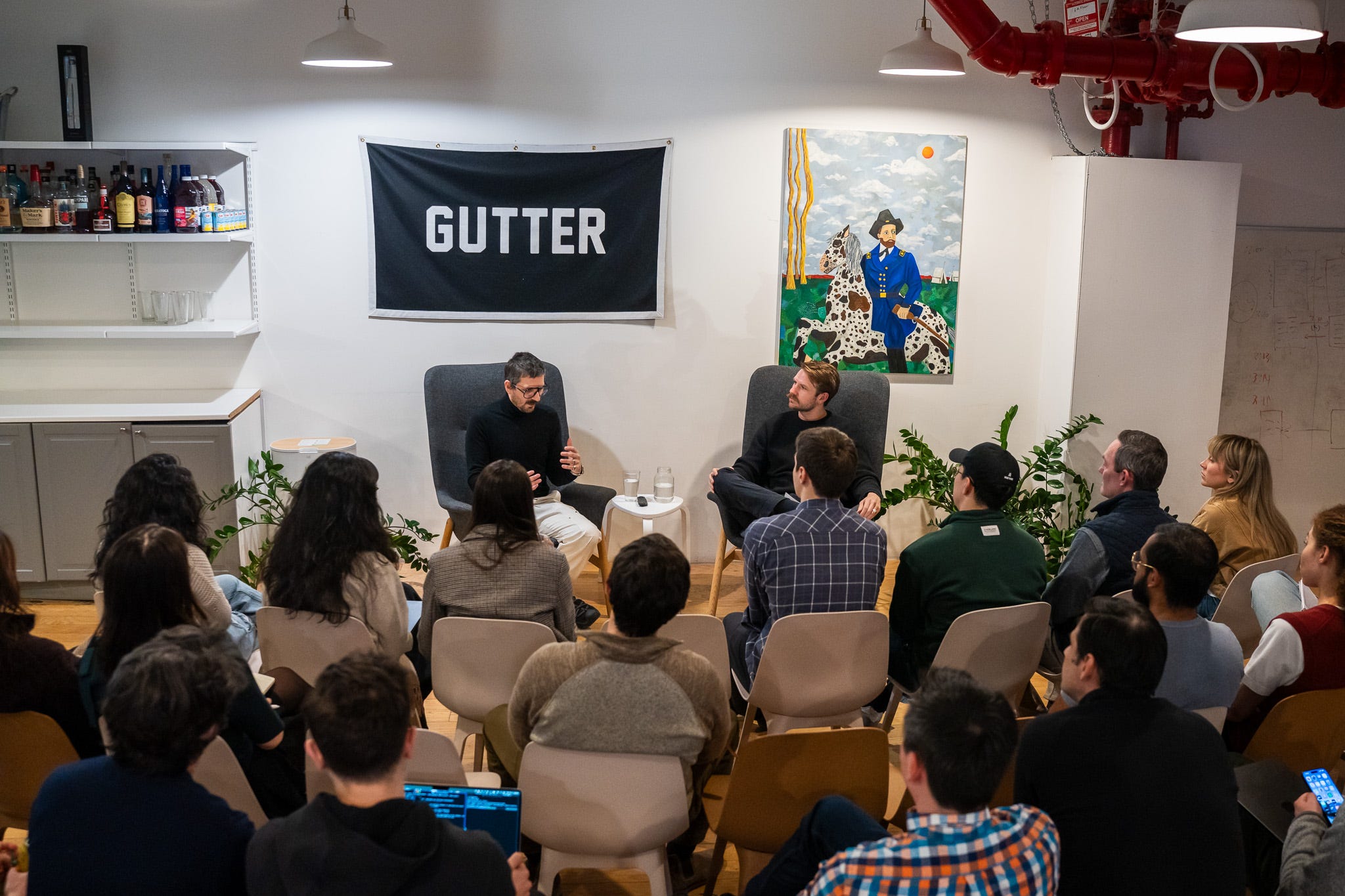
Upstarts tagged along for one fireside chat as David Politis, who built and sold BetterCloud (and had just hosted Upstarts on his podcast) interviewed ServiceChannel ex-CEO Tom Buiocchi.
In the room, Buiocchi seems tickled by the close attention paid to him by the attending founders, especially when he tells a war story about Frank Slootman, the former Snowflake CEO. Afterward, he holds court, encouraging founders to come pitch their product in the office, and fielding tactical questions.
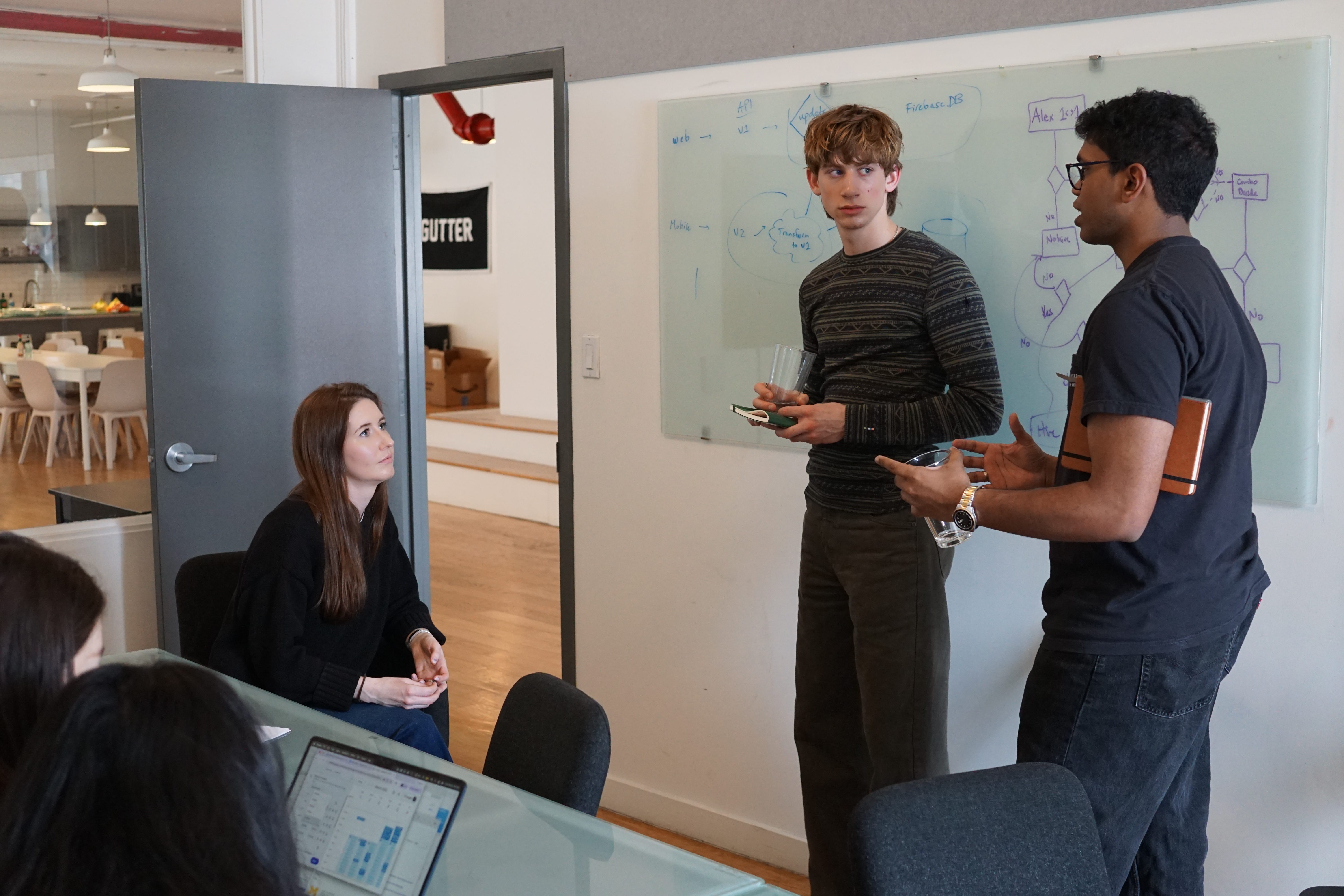
On another afternoon, in a workshop with Chris Thompson on founder-led sales, the Bikky co-founder asks a conference room of batch staffers if any of them have hired a salesperson. No one has, so he deftly shifts his presentation to focus on avoiding common mistakes in doing so. It’s a full-circle moment for him, he says, as Teran would come to board meetings for Bikky, which manages customer data for restaurant chains, and ask him why he hadn’t hired more.
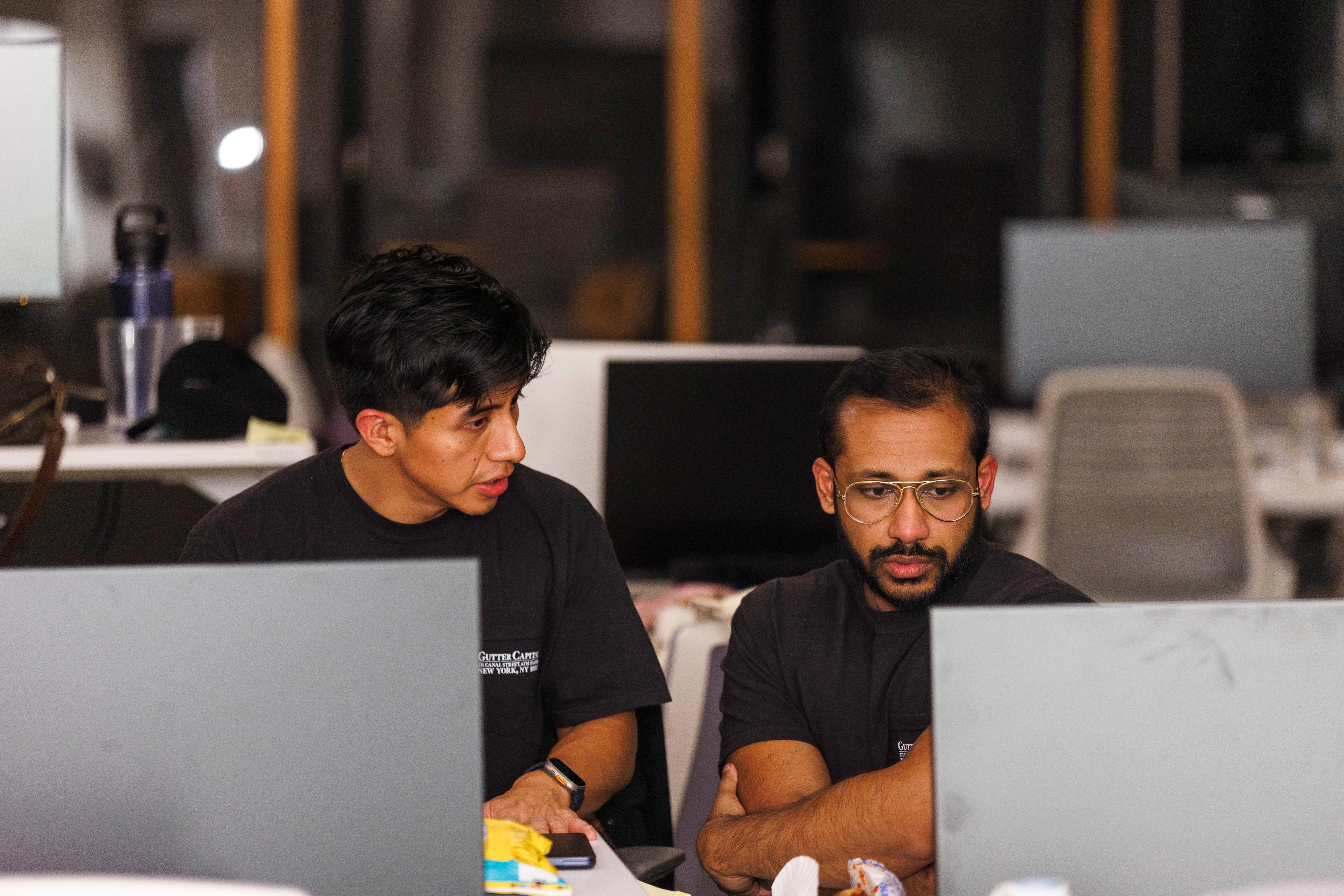
Those sales and hiring insights were especially appreciated at QuickSecure, where Georgia Tech dropouts Rohan Kumar and William Susskind are building a system that combines software and hardware to allow schools to respond faster, and more safely, to emergencies and drills.
Gutter helped QuickSecure run its first engineering recruiting process as it closed a private school with more than 50 campus buildings.
“I think Gutter hit the right balance of being present and supportive,” says Kumar, the startup’s CEO. Later, on a private tour of the Whitney Museum of American Art’s Biennial exhibition, Susskind reflects that he’s glad to be pushed out of the office occasionally by Elbow Grease to experience more of New York. “We know we need to do stuff like this,” he says. “Maybe you see a painting, and you’re inspired.”
Out of the gutter
A few weeks after demo day, four of the eight startups in the batch work at least partially out of Gutter’s offices, which recently added a second floor for portfolio companies. Several, with deeper ties in Los Angeles and San Francisco, have moved home; the batch’s Atlanta-based company, Punch, is considering sharing a local space with another Gutter company.
With the dust settled, highlights of their progress in Elbow Grease include:
First enterprise customer wins for JoyWork, Keeper Systems, and big customer wins for LegacyAI, Punch, QuickSecure and SwitchBoard
Adoption of GRAIL’s agentic science editor by researchers across 75+ academic institutions
Endorsement of Galileo Space’s first mission capability (targeting next year) by the Air Force Research Laboratory’s Director of Space-Based Sensing
Fundraising discussions still confidential for now
One big question for Elbow Grease: how that connection scales. It’s no secret that seed funds are looking to incubate startups and work with founders earlier than ever, partly in response to how quickly a startup can get going today, partly to make the venture math work securing more ownership in a company at higher valuations.
“You have a lot of funds that all look the same competing for the same eligible companies,” admits Teran.

Elbow Grease also isn’t the only game in town. Just in New York, promising startups have come out of recent programs at Betaworks and Newlab, as well as the South Park Commons founder community; stalwarts like Techstars and Entrepreneurs Roundtable Accelerator (ERA) still operate. Plus, in the AI era, the pull of San Francisco remains strong to a host of options, from YC to a16z speedrun, Neo, PearX, and more hacker house-style residencies like HF0.
From their structure to the type of startup they seek, each projects its own signature style. But Teran is aware that high-pedigree founders might apply to several. Gutter is simultaneously embracing the competition, while adding systems to try to vet applicants for the new batch for their genuine interest and fit.
Much of Elbow Grease’s momentum falls on the shoulders of its small team: Teran, Gettinger, and a small team including operating partners Richard Hughes and Vince Li, and operations lead Carli Casteel. Gutter leverages their personal and professional networks hard to attract top mentors and speakers. A fund, called Gutter Infinity Fund, that shares 5% of fund profits with its portfolio founders helps; so does giving mentors upside in Elbow Grease.
But as Gutter hopes to review 1,000-plus applications for its second batch – and settle into a rhythm of two batches every 18 months or so – the pressure is on its selection process, first for the right startups, and then for the right mentors, Teran notes.
“It comes down to who you’re choosing,” he says. “We only have so many hours to focus on interviewing and screening the right subset of companies.”
Participants in Elbow Grease’s first batch are bullish, from the founders to the experts tapped. About half of mentors still communicate weekly with their batch founders, according to Teran, and have made personal investments or taken formal advisor roles.
At Electric, Denehy says he’s still in a Gutter-created Slack channel riffing with the Galileo team several times per week.
“If you’d told me from the outset, ‘Hey, our expectation is that you’re going to be talking to these guys multiple times per week, you’re going to be reading pitch decks,’ I’d have said I don’t have time for that,” he says. “But the reality is, busy people always have time for one more thing, if they want to do it.”
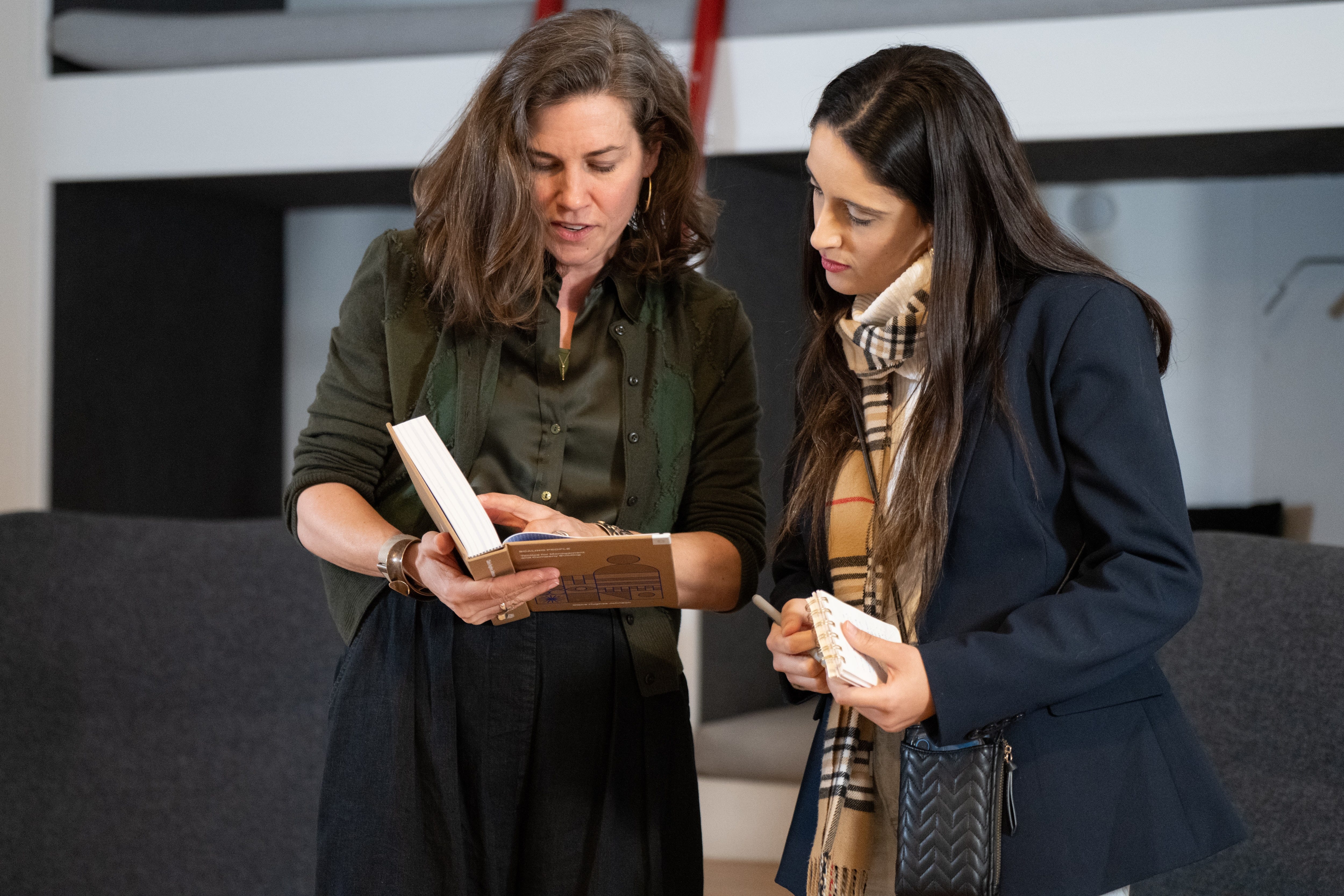
Stripe’s Hughes Johnson has spoken at more accelerators and founder dinners than most. She says she was impressed by the level of preparation of Elbow Grease’s founders to go beyond ‘the ABCs’ in their questions, which she sees as a testament to the Gutter team.
“You’ve got to love that they call themselves Gutter, and this program Elbow Grease,” she says. “They actually put their hands in and get dirty.”
But while there’s something “pretty special and unique” about Elbow Grease for Hughes Johnson, she doesn’t think it needs to be.
“We need more of this, in more places across the country.”
From one scrappy founder to another, love this! Would love to share journeys: https://hbsfounderdiaries.substack.com/p/day-18-downward-dog-with-the-worlds?r=8hmgfx
✅ investor in ManagedByQ
✅ coinvestor with Gutter
✅✅✅ investor in Gutter I, II, III
love me some Dan Teran