


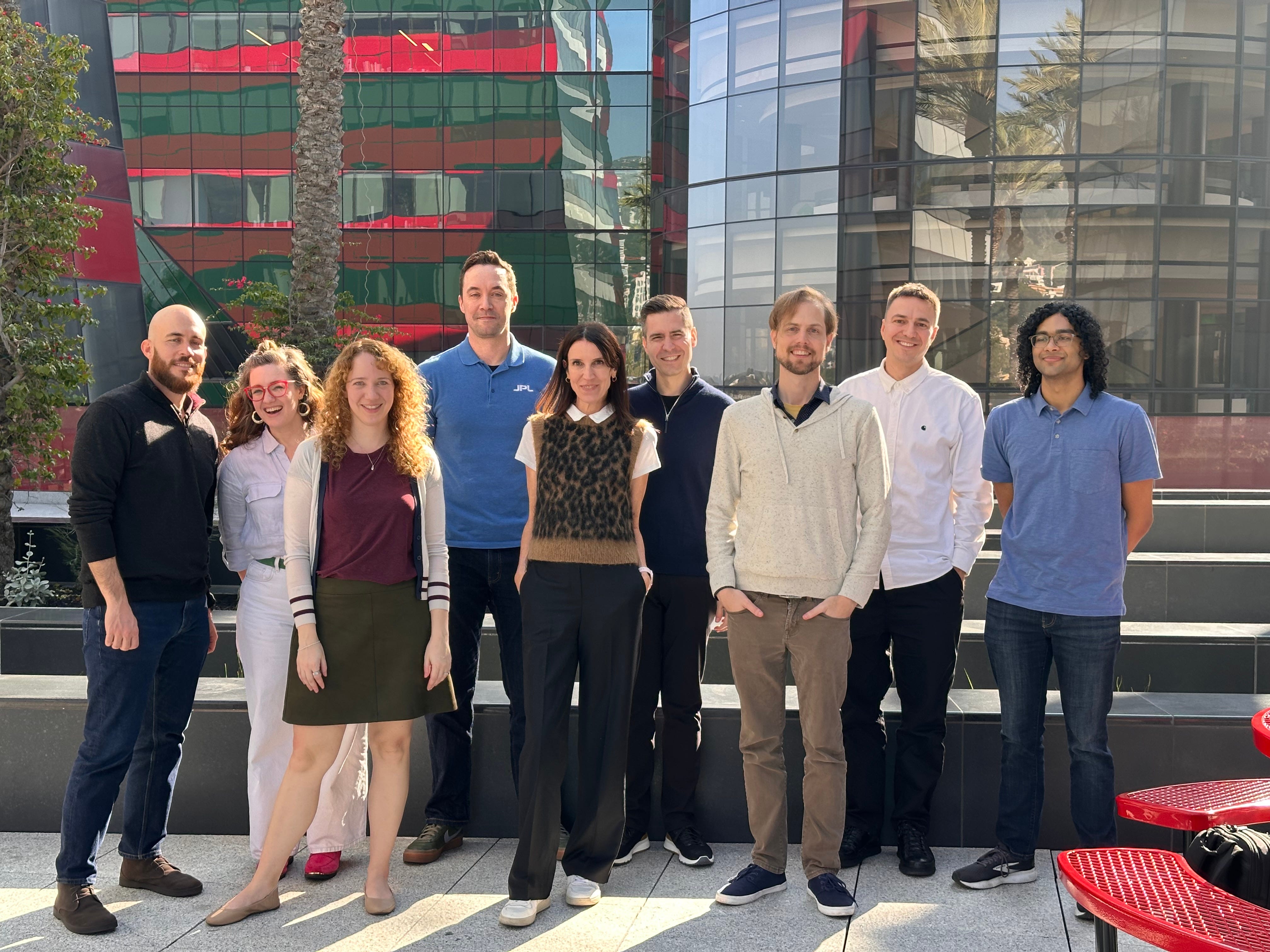
Startup founder Andrew Gasparovic loves flying. But he also sees the industry at a breaking point.
Every day, more than 3 million people in the U.S. board about 47,000 flights – the most in 15 years – only to face bottlenecks on the runway and in the air, increasing turbulence, and missed connections.
“The situation today is untenable in the long run,” Gasparovic tells Upstarts. “You keep growing passenger demand and aircraft in the airspace, and you also see a breakdown of air traffic control and all these other problems. It’s not really sustainable.”
Gasparovic’s startup, Flight Science, has big ambitions to help. Founded in early 2024, the Los Angeles-based startup is building what its CEO calls the “operations platform for airlines”: a system that can streamline airline operations on the ground and in the cockpit, leading to smoother, more efficient and on-time flights.
It’s a problem that, despite several decades-old large players, hasn’t really been solved, argues Gasparovic. More than many, he’s in a position to know, having spent more than a decade at two of those industry vendors mixed in with a long career at Google and an Apple stint.
His ability to balance the two – wonky industry knowhow with Silicon Valley knowledge of real-time data and advancements in AI – has Flight Science and its backers excited about the prospect of cracking the challenge.
Currently 10 people, Flight Science recently raised $5.5 million in seed funding led by Root Ventures with participation from Outsiders Fund, which previously led the startup’s $1.5 million pre-seed round in March.
BermudAir is already a customer of the startup’s inflight optimization software; several U.S. carriers that Gasparovic says he can’t disclose are currently testing an app for airline operations centers it plans to ship this August. A third module, an interconnected app for pilots to access on their inflight tablets, is expected to launch early next year.
While still small today, Flight Science can serve as a case study in progress for the wider startup ecosystem because of at least three factors that we’ll dive into below.
The TL:DR for busy founders:
Flight Science leverages unique founder market fit
It applies new tech to old, siloed domain knowledge
It takes a practical market approach to target the most willing buyers
“We should be able to think about an airline’s entire day’s worth of flights, and understand and have predictive power over what happens that day,” Gasparovic says. “But ‘move fast and break things’ doesn’t work the same way when it comes to operating flights.”
Upstarts is publishing our most ambitious feature story to date soon, and premium subscribers will get full access first. Join them for 20% off for a limited time. Interested in sponsoring startup launch stories like this? Drop us a line.
Founder market fit

In 2019, Gasparovic surprised his colleagues at Google, where he had spent eight years working in database and machine learning infrastructure, by going back to Sabre Corporation, the travel-focused IT company that works with many of the world’s leading airlines, hotels, rail carriers and car rental brands.
His mission was what then-CEO Sean Menke, called ‘Sabre 2.0’: rebuilding the company’s software from scratch to be cloud-native, and better equipped to incorporate AI tools. (Menke is now an angel investor in Flight Science, as is Gasparovic’s other former boss, ITA Software cofounder Dave Baggett.)
The effort focused on the commercial side of airline operations – passenger reservations and services, booking and retail – and Gasparovic became convinced he could build a new-look solution on the operations side, too.
But after Covid-19 disrupted travel for an extended period, Sabre sold its airline operations portfolio for just under $400 million in 2022, and Gasparovic joined Apple. The idea didn’t go away, though. “People in operations, and flying planes, are just as deserving of good technology innovation,” he says.
It’s a personal passion for Gasparovic and his family, too: he’s a pilot, preferring to fly a Cirrus SR22T single-engine aircraft; Gasparovic’s wife, who has gone up on some of those flights, works for the startup in its product marketing.
For Root Ventures investor Kane Hsieh, a recreational pilot himself, Gasparovic represents the perfect blend of industry expert with technologist. “He deeply understands the industry’s incentives and motives, but also understands the tech to think beyond linear improvements,” he says.
Technical two-step
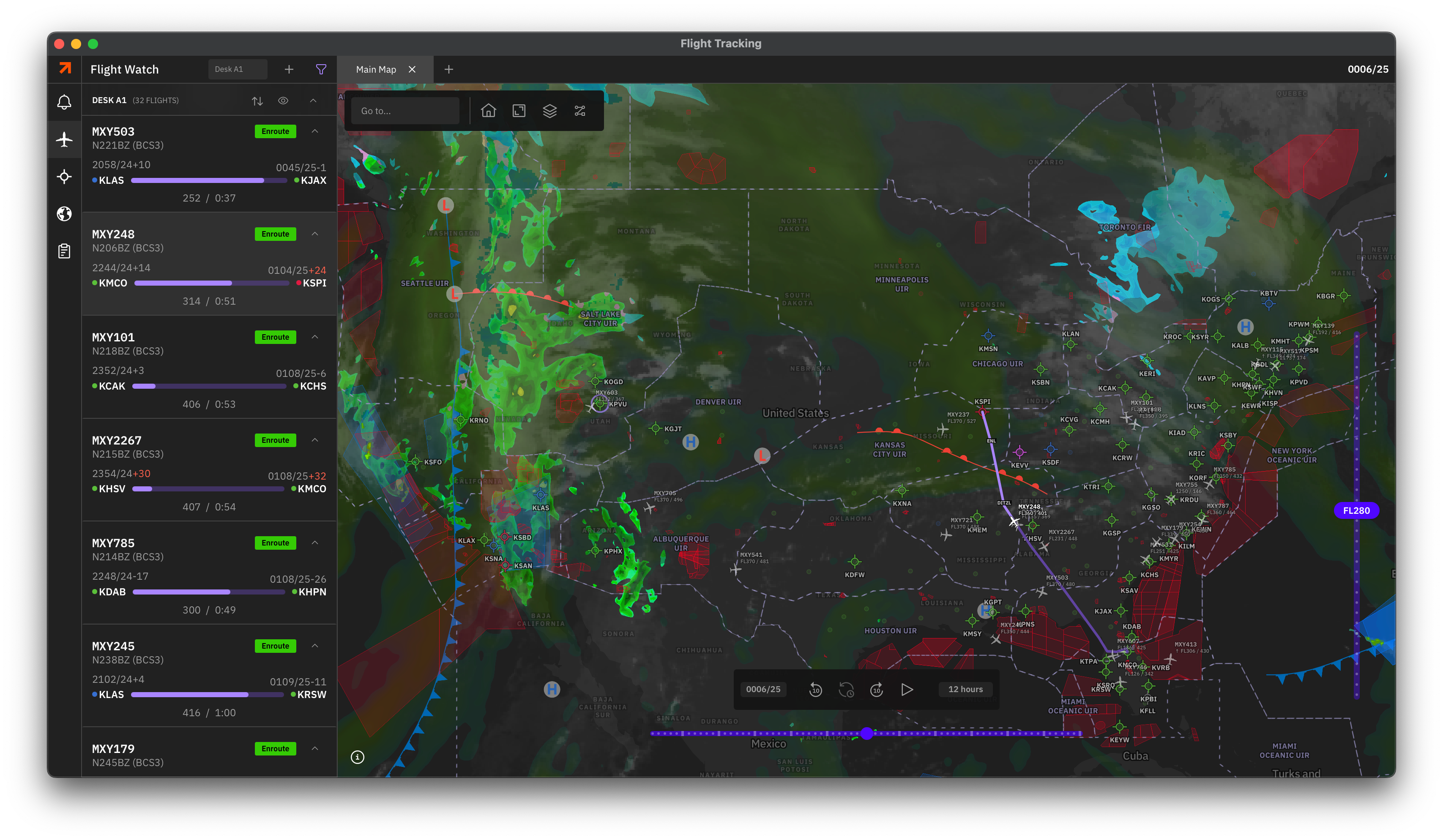
When something is going wrong with your flight, like a bumpy ride or a weather delay, an airlines operations center’s dispatcher is the specialist who will try to reroute you, find you a new connection, or find a crew or plane to help.
Dispatchers typically spend about 10 hours a day frantically scanning and clicking across two or four monitors, showing everything from weather patterns to the flight conditions for 10 or more flights across a number of apps, web pages and documents.
“They’re trying to notice something interesting, but it’s a needle in a haystack,” Gasparovic says.
On the plane, pilots can message back to the center via ACARS, a special digital communications system that allows them to text from their onboard computer and discuss changes to the flight plan with the ground. But it’s not the most efficient way to communicate, and they lack big-picture context, Flight Science’s CEO adds.
Flight Science’s solution: a system that can stream data in real-time to make recommendations about changes in altitude, speed or route. A human – the pilot – always makes the final decision, but AI speeds up the process by catching potential issues faster, and surfacing them automatically.
To do that, the startup had to figure out how to plug into the right regulated data sources, while communicating effectively with the Federal Aviation Administration. “These are not things you can really ask ChatGPT about and have it do a great job helping you write code,” says Gasparovic. “It’s very industry specific, arcane technology.”
Flight Science spent a year working through all that data piping before its product was ready to take off. Its big unlocks: affordable compute and streaming data to run AI on top of, as well as AI code tools for using internally for its own development (without the tools needing flight-specific knowledge).
Flying priority
Flight Science has started by selling solutions for just two problems – turbulence avoidance and fuel optimization – that were more low hanging fruit. The apps for dispatchers and pilots, as well as more functionality like crew management, could be tacked on over time.
George Easley, an investor at Outsiders Fund, says that modular approach has resonated with Flight Science’s ideal customer persona, an airline. “You can’t sell a sprawling system,” he says.
That also allows Flight Science to slide in with midsized, more tech-minded airlines that aren’t the marquee customers of incumbents like Jeppesen, which Boeing sold last year to Thoma Bravo, Airbus’s NAVBLUE unit or the buyer of Sabre’s offerings, CAE.
Other startups operate in aviation, like Y Combinator alum Enhanced Radar, trying to bring AI to air traffic control challenges, and Beacon AI, working on flight safety through cockpit navigation. Flight Science sells to a ready buyer – airlines – with a clearer path to meaningful revenue, its backers believe.
Gasparovic says his startup would welcome chances to help air traffic control staffing crunches and challenges, but selling into the government isn’t currently a focus. On customers, he concedes that the relatively small number of viable airline customers out there – he estimates the number of strong candidates at around 500 – has spooked investors and founders in the past.
Those numbers can be deceiving, he argues, as each airline can be a meaningful revenue stream. “This is not a get-rich-quick area,” he says. “But it’s possible to build a large and impressive company here.”
In my flustered state of realizing I made my comment before completing the whole article, I ended up deleting my last comment. We can commemorate my amateurish mistake here *moment of silence for my pride RIP*
It’s good to see venture investors making investments in concentrated industries like aviation. It is easy to forget just how many and how diverse the whole industry is. >19,000 airports in the US is far higher than I would have pegged it.
There are a handful of interesting robotics companies that are trying to make up for the hiring shortages for baggage handling. It makes sense, scoped domain, low speed vehicles, basically exact same route every time for the baggage tuggers. I was shocked to learn how much the airports/airlines were paying for them.
My last comment also mentioned terraforming. I expect that we will eventually come to the (fairly obvious, but unfortunately not urgent enough) realization that we missed the window of opportunity to mitigate climate change through limiting our emissions and will therefore need to proactively alter the climate via some terraforming technologies.
I would be very interested in reporting in that domain.
Once again, great coverage Upstarts team!
The modular approach here is smart. Trying to sell sprawling systems into legacy industries usualy goes nowhere because buyers freeze up trying to justify the full transformation. Starting with turbulence avoidance and fuel optimization givez airlines quick wins before they commit to the full platform.