


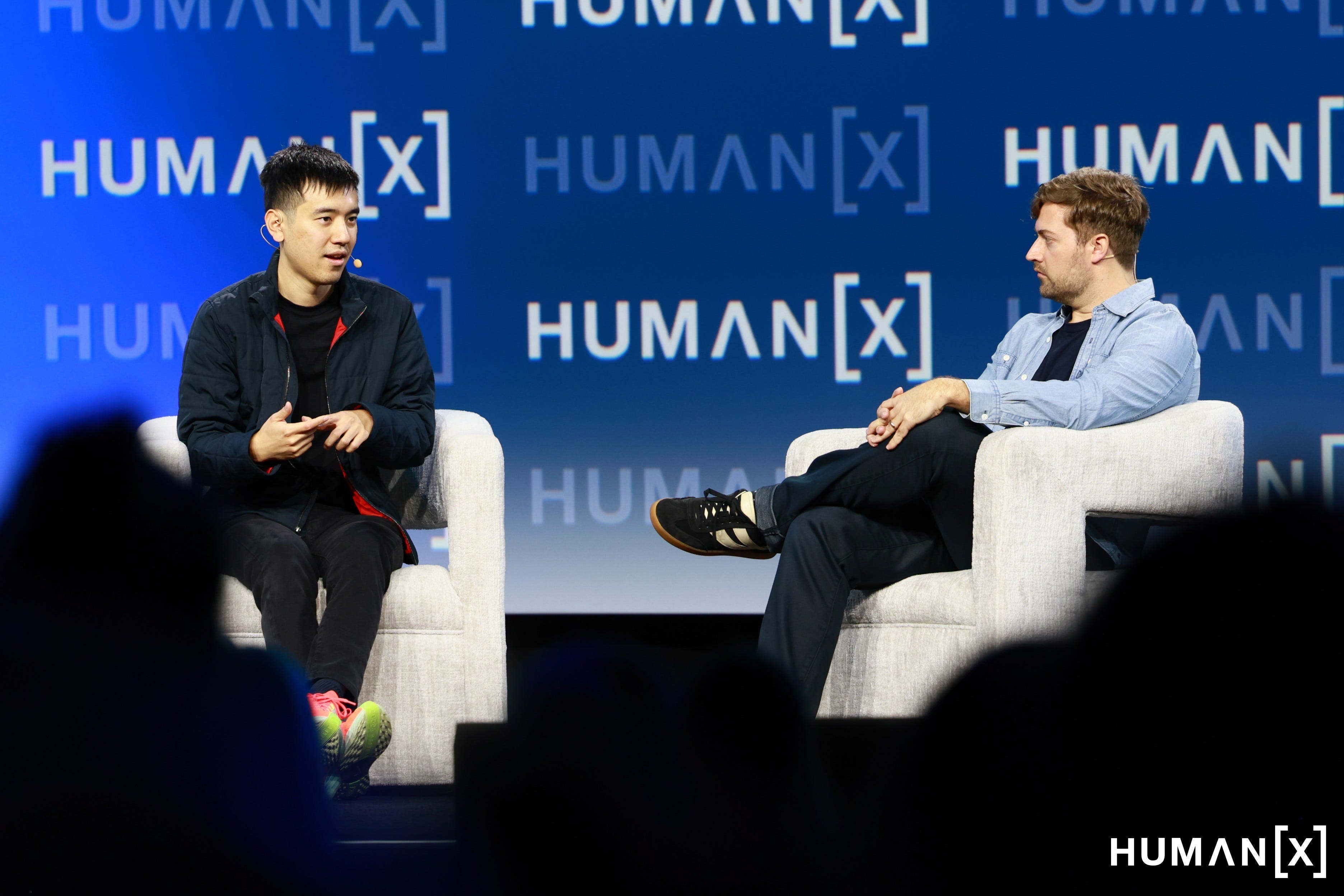
When DoorDash co-founder Stanley Tang pictures you ordering lunch, or a new phone charger, he doesn’t see a person driving it to you. He doesn’t even see a car.
Robotaxis were designed with transporting people in mind, not a sandwich.
“You’re just trying to retrofit that form factor into a delivery use case,” he argues. “If you think about it from first principles, why would you need a 4,000 pound car?”
That line of thinking helped lead Doordash to design the Dot, an electric autonomous delivery robot that it started publicly testing in Phoenix, Arizona last year. About four feet tall, the Dot can travel up to 20 mph, use sidewalks, bike lanes and roads, and carry up to 30 pounds on its own 350 pound frame – what the company bills as a safer and more efficient way to move goods.
When Tang, one of four now-billionaire founders of DoorDash, first set up its Labs unit in 2018, the company didn’t expect to be building its own robots. Instead, its autonomy strategy was focused on partnerships, Tang says.
We talked about that journey and lessons about setting up an R&D unit, as well as DoorDash’s thinking about autonomous vehicles and robotics more specifically, last week at the HumanX conference in San Francisco – on the main stage, as well as backstage for more to bring our Upstarts readers.
(Tang unsurprisingly didn’t give us a heads up that DoorDash would be participating in a controversial ‘delivery’ and press conference with the White House several days later; The Guardian can catch you up there if curious.)
You can find our key takeaways and video clips from the conversation below.
On Friday, we will publish more startup takeaways from our other interviews at HumanX:
AI and data in health and wearables, and how women have been left behind, featuring Oura CEO Tom Hale and Midi Health CEO Joanna Strober
How two productivity unicorns are thinking about AI in workplace productivity both internally and for their customers, featuring Gamma co-founder Jon Noronha and Miro CEO Andrey Khusid.
That post will be for paid subscribers only. If you’re curious what they had to say, or simply want to support our work here at Upstarts, it’s a great time to participate in our first birthday sale: 25% off an annual subscription.
That comes out to less than one of DoorDash’s sandwiches each month.
Partner vs. build
DoorDash initially intended for Labs to set up partnerships with other hardware companies for its autonomous strategy, not build its own.
DoorDash would offer APIs to connect to its software, handle operations and distribution, and leave the rest to other startups, Tang says.
In practice, things weren’t so simple. DoorDash’s surface area was broad and heterogeneous – urban areas, suburban, rural; short, medium, long distance – meaning few startup partners had more than a solution for one use case or persona.
Where hardware partnerships have ended up making the most sense so far: drones.
There, DoorDash partners with Wing, the delivery company owned by Google parent Alphabet that was itself a product of its ‘moonshot’ X Lab. (Co-founder Larry Page also launched and eventually wound down a flying car startup, Kittyhawk.)
DoorDash also works with Flytrex, an Israeli drone startup that operates in the U.S., and Manna Air Delivery, an Ireland-based startup.
(In 20223, I watched a Manna flight firsthand outside of Dublin with Stripe co-founder John Collison, one of its earliest backers, as part of a Forbes cover story on Collison and his brother Patrick.)
Worth the weight
Where DoorDash wants to operate now: the platform between merchants and customers that can connect any autonomous or human delivery modality to best fit the environment, distance and order type.
Drones will make sense for more remote or rural deliveries; robots like Dot for more dense suburban ones. DoorDash doesn’t have a good answer for high-density urban environments like the streets of New York City yet; most of its business happens in the suburbs anyway, says Tang.
DoorDash calls the system deciding its best delivery mode the Autonomous Delivery Platform, and it’s a selling point for Tang with potential partners and hires. “There’s a lot more to autonomy than just autonomy,” he says. “You’ve got to build the ecosystem around it.”
Doing so has led DoorDash to ship another product its founders didn’t envision, besides the Dot: a new version of an old-school scale, for weighing items.
The problem: drones have strict weight limitations, and DoorDash didn’t know how heavy the food orders it facilitated were. In order to work with Wing, the company had to design and send customers a scale to check them; then it started collecting that data.
“We started realizing, ‘hold on a second.’ This is actually super valuable data that not only works for drones, but could potentially work for robots, too,” Tang says.
Today, DoorDash has shipped more than 20,000 of its SmartScales to merchants. The scales have had another unforeseen benefit beyond autonomous delivery, too: the data helps restaurants know when orders might be missing items, because they’re coming in too light; participating customers have seen a 40% reduction there, says Tang.
Working backwards
As DoorDash expands its use cases into parcel delivery, Upstarts asked Tang if we should expect more versions of its Dot robot, or other robots that could specialize in packages of varying sizes.
Tang, the first DoorDash leader to confirm publicly that it’s currently testing autonomous package delivery, said it’s a fair guess. Test users have already ordered items like cameras and Mac Minis for setting up OpenClaw agents, he says.
Where lab, R&D or ‘innovation’ teams have failed inside scaling startups or recently public tech companies, Tang argues, is that they don’t work backwards from a business outcome, Tang argues. (The current wave of AI and robotics labs could take note, too.)
“A trap a lot of these kinds of research labs or hard tech labs fall into is they start with the technology first, build that in a vacuum, and then they try to figure out what use cases to try to fit it into later,” says Tang. “Whenever that happens, it always feels like the product isn’t quite the right fit.”
Startups or companies looking to design programs like DoorDash’s autonomous one should also ask themselves where the data sits, Tang adds. DoorDash had 10 billion lifetimes deliveries to use as data, and even then realized it was missing a key component with order weight.
It also needed data on a number of last-mile questions, like how to avoid parked cars, navigate roaming dogs, or reach a doorbell. “The hard part isn’t building a prototype,” Tang says. “How do you deploy the autonomy across multiple categories, at a global scale?”
To reinforce the point, Tang notes that DoorDash manages 9 million deliveries per day. A one-in-a-million chance of something happening will typically feel pretty remote. For DoorDash, that means it could be happening eight or nine times every day.
As DoorDash’s autonomous deliveries roll out, it’s easy to imagine a bunch of edge cases that could range from headache to fiasco. What if people realize its package delivery drones are carrying high-value items, and are easy to break into? What if more videos go viral of delivery robots getting stuck? What if one of its drones misses and puts a package through a sunroof?
Those are problems for Tang and partners to watch, but Tang believes that having the data and distribution is the most important place to start. Then DoorDash will keep building solutions for use cases where it doesn’t find strong options, startup or not.
His last word for now: “This is here already. It’s not a science fiction thing.”