


The Upshot
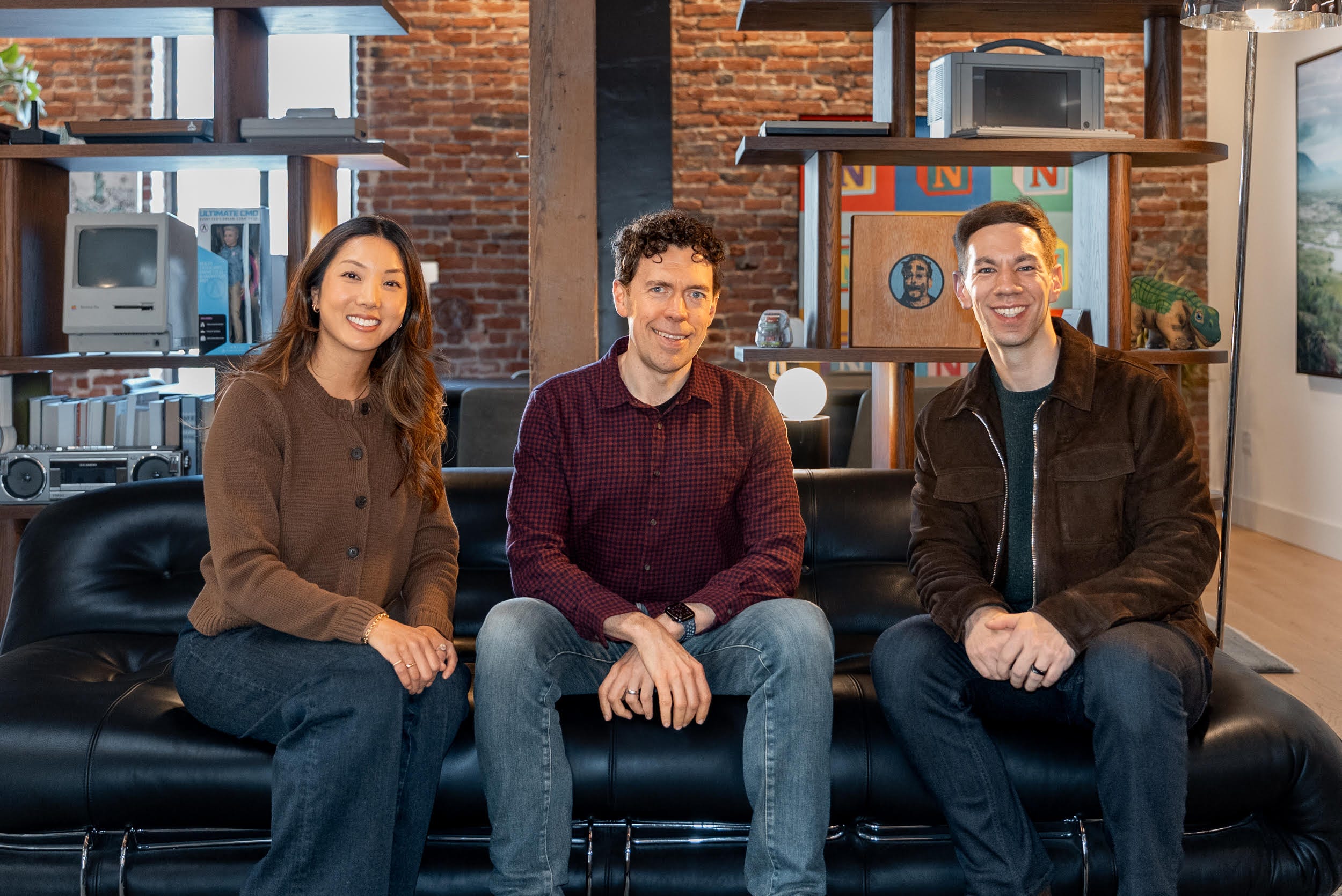
Serval co-founders Jake Stauch and Alex McLeod credit much of their recent success back to their time at another startup, Verkada.
As the heads of product and engineering at the security unicorn, they worked closely together on a feedback loop: talk to customers, build for their pain points, figure out how to sell it more widely, then talk to more.
“It’s the kind of founder magic that leads to such a great end experience for the customer,” says Stauch, Serval’s CEO. “Why would you ever give that up?”
But Serval, which launched two years ago with software automating systems for IT teams, and which has now expanded into areas like HR and finance, is growing too fast for its founders to still have their hands in every loop.
The company raised $75 million in December at a $1 billion valuation after revenue grew 6x in three months. A team of just about 60 staff now work with customers including tech high-flyers like Notion, Perplexity, Together AI and Vercel, but also almonds cooperative Blue Diamond Growers and media conglomerate Fox.
So Serval has come up with a novel experiment for scaling founder-level care: a program that explicitly hires aspiring founders to work as forward deployed engineers.
Called Serval Start, the program is launching with a cohort of one dozen members, with four already committed, and eight reserved for net-new hires.
Cohort members will be thrown at the company’s most strategic and biggest accounts, with the expectation that they’ll be able to troubleshoot and hustle their way to maintaining Serval’s “vertical line” growth.
What they get in exchange:
Accelerated equity vesting schedule with a six-month cliff (compared to typical one year)
Early exercise rights at Serval’s valuation from when they start
Direct access to Serval’s execs including its founders
Time with its VCs including First Round, Redpoint and Sequoia
Weekly and monthly meetups and other programming
The program will be led by Christine Kim, who joined Serval two months ago after spending five years investing at Greylock. Its success will be measured, she says, not just by how participants boost Serval’s business, but also by the startups they eventually leave to build.
“There’s a lot of programs targeted toward founders that already have an idea, or a company in mind,” Kim tells Upstarts. “We wanted to find something that would be even earlier than that.”
Upstarts recently celebrated our first birthday. To celebrate, we’re offering 25% off a one-year subscription for a limited time 🎉
In a frenetic startup environment where investors and longtime operators are launching new-look residencies and founder matching programs to try to launch – and invest even earlier – in new businesses boosted by AI’s new capabilities, Serval’s program stands out as arguably the first formal, in-house program of its kind.
It’s not without risk, from hiring pressure to team dynamics, and what could work for Serval may not apply to every startup. Still, the program is worth the wider ecosystem watching closely – if anything, to see what new startups emerge.
How Serval set up the program, thoughts from two of its early members, and the risks and implications for other startups are below.
A MESSAGE FROM OUR SPONSOR
Lowering costs, simplifying care

UnitedHealth Group is helping simplify how patients navigate care by investing in transparency tools that make it easier to locate nearby providers and compare costs.
Transparent pricing can save patients hundreds of dollars annually.
‘Extended bootcamp’
Serval’s CEO Stauch hopes that Serval Start can spare founders from living his own experience before his current company.
Coaching companies isn’t new for him: at Duke, he helped build out the university’s entrepreneurship club, later serving as a mentor alongside his spouse Tatiana Birgisson, also Serval’s COO. But Stauch spent seven years building his first startup, which focused on brain-controlled marketing research and then video games, before moving on to lead product at Verkada.
“I could have cut off a lot of time there,” Stauch says. “This is the program I wish existed then.”
The idea of such a program first came up in a board meeting. It got legs – and Kim as its champion – because Serval leadership and investors were grappling with a problem of how to serve overwhelming customer demand.
The answer, Stauch and co. believed, was an employee empowered to build new features at customer requests, take initiative and problem solve like Serval’s founders did when they led all sales.
That doesn’t mean any old forward deployed engineer, argues Stauch: “There’s been a proliferation of what’s called an FDE in tech right now, it’s everywhere,” he says. “But if you look under the hood, most of these folks are just implementing software. It’s a rebranded solutions engineer or implementation consultant.”
Some elements of the program already existed informally. Employees known to be interested in starting companies might already get introduced to Serval’s investors; the startup also already intentionally hired former founders who might want to try again.
That was the case with Spencer Lang, an internal selection for the upcoming cohort. After working at Microsoft for several years, Lang had joined a startup as a founding engineer and then co-founded a startup intended to help non-profits use video in direct mail. When his co-founder departed the project, Lang decided to join Serval last October as an FDE to retrench and build up his network.
“I was pretty explicit upfront with Jake that I would start another company, and he was super supportive of that,” Lang says.
Working closely alongside fellow hires over a sustained period of time can give you a better understanding of who might make for ideal co-founders than searching through Y Combinator’s Co-Founder Matching Platform, or even joining a residency like HF0 or South Park Commons, he argues.
“I can think of five people here that I would start a company with, and have extremely high confidence,” Lang adds.
High talent density is what attracted an early outside applicant selected to participate. Felicitas Binz spent nearly three years working in product at healthcare automation startup Luminai before leaving in November to pursue her own startup idea.
Like with Lang, Binz’s project with her planned co-founder friends didn’t work out, and no natural co-founders materialized in her network. Joining Serval, she decided, will allow her to meet other high-achieving peers, while “challenging” her own product knowledge at the cutting edge of how AI software is being deployed.
“A lot of stars need to be aligned before you can go full-time on a startup,” she says. “Serval is a place where I can be more strategic about my next step.”
‘Great takes time’
It seems likely that Serval will have no difficulty filling the eight remaining spots in its first batch.
That’s when the hard part starts, Kim knows. The bar for success includes Serval Start hiring even more exceptional talent than its typical standards, she says; those hires will then need to meaningfully grow the startup’s business, while also taking advantage of the program’s opportunities.
On the business side, Serval already has a customer pipeline bigger than it can handle for 2026, Kim says. Whether it can accelerate deployments and revenue will depend in large part on its FDEs, and specifically this Start squad.
At the same time, Serval will expect Start members to work nights and weekends on their entrepreneurial journeys – not regular company hours.
“Actually learning what great looks like takes time.”
If the cohort is too mercenary, lagging on their day work to prioritize the networking side, and leaving as soon as their equity vests in six months, the program will fail.
Serval’s leaders say that’s not as big a concern as it might seem from the outside, because personal performance is tied closely to the company’s. “We’re still small enough where you can’t really hide, and you can’t really look good without doing something that’s helping our customers,” Stauch says.
Still, everyone leaving within six months, and Serval having to start over with those FDE roles and the batch, would be a mixed outcome. “It’s a risk that we have to be excited about,” says Kim.
Bill Trenchard, the First Round partner who invested early in both Verkada and Serval and is volunteering to work with the batch, says he’s “not too worried,” and expects many of the cohort to last up to the intended two years.
“Actually learning what great looks like takes time,” he argues. “And the best people will want to make a huge difference, wherever they are.”
What if those startups bring engineers or other staff along with them, plunging Serval into a brain drain? The startup’s founders left Verkada amicably, and the company invested in the new idea. Serval’s best case scenario is probably that the Start members pair off with each other, but that’s not a given.
“There’s a balance to be struck there, and I’m sure there’s a threshold where it’s less cool,” says Lang. “That’s a bridge to cross when we get to it.”
A new playbook?
If you’re a founder or startup staffer reading this far, we’re guessing it’s because you’re at least curious to explore whether a version of Serval Start could work elsewhere, too.
It’s obviously too early to know whether Serval’s experiment will work out. But its organizers note a few criteria that made it seem worthwhile for Serval, that can serve as a checklist for exploring at other startups.
Traits for a company to benefit from founder FDEs:
Serval is high-growth: Enterprise and Fortune 500 sized accounts come in every week, Kim says, meaning there is constant demand for staff to jump on ever-bigger, more complex deals.
But it’s not too big: With under 100 employees, Serval still operates at a scale in which FDEs can actively build and ship features for customers – something harder to do at bigger organizations like OpenAI.
It’s enterprise-focused: Such a program only makes sense where FDEs are at a premium, and when aspiring founders want to build in B2B or enterprise themselves. It won’t make sense for a consumer app.
Its product has wide reach: Serval’s automations touch upon a number of teams within a customer, from procurement and finance to legal and security, as well as product and engineering. Such exposure might be less valuable for FDEs at companies that only sell to one team, such as engineering or sales.
Companies that could naturally set up such a program, per Stauch: Ramp in fintech, or AI agent builders Decagon and Sierra.
There’s one more variable to consider: ability to attract premier talent. If the people coming in aren’t more skilled in a certain area than your status quo – meaning you’re not unlocking access to stars you couldn’t hire otherwise – it’s unlikely to be worth the trouble for the company and investors alike.
“Maintaining selectivity is going to be the main challenge,” says Kim. “We already push ourselves to look for the top tenth of a percent of engineering talent, and now we have to look for the top one-hundredth of a percent.”