


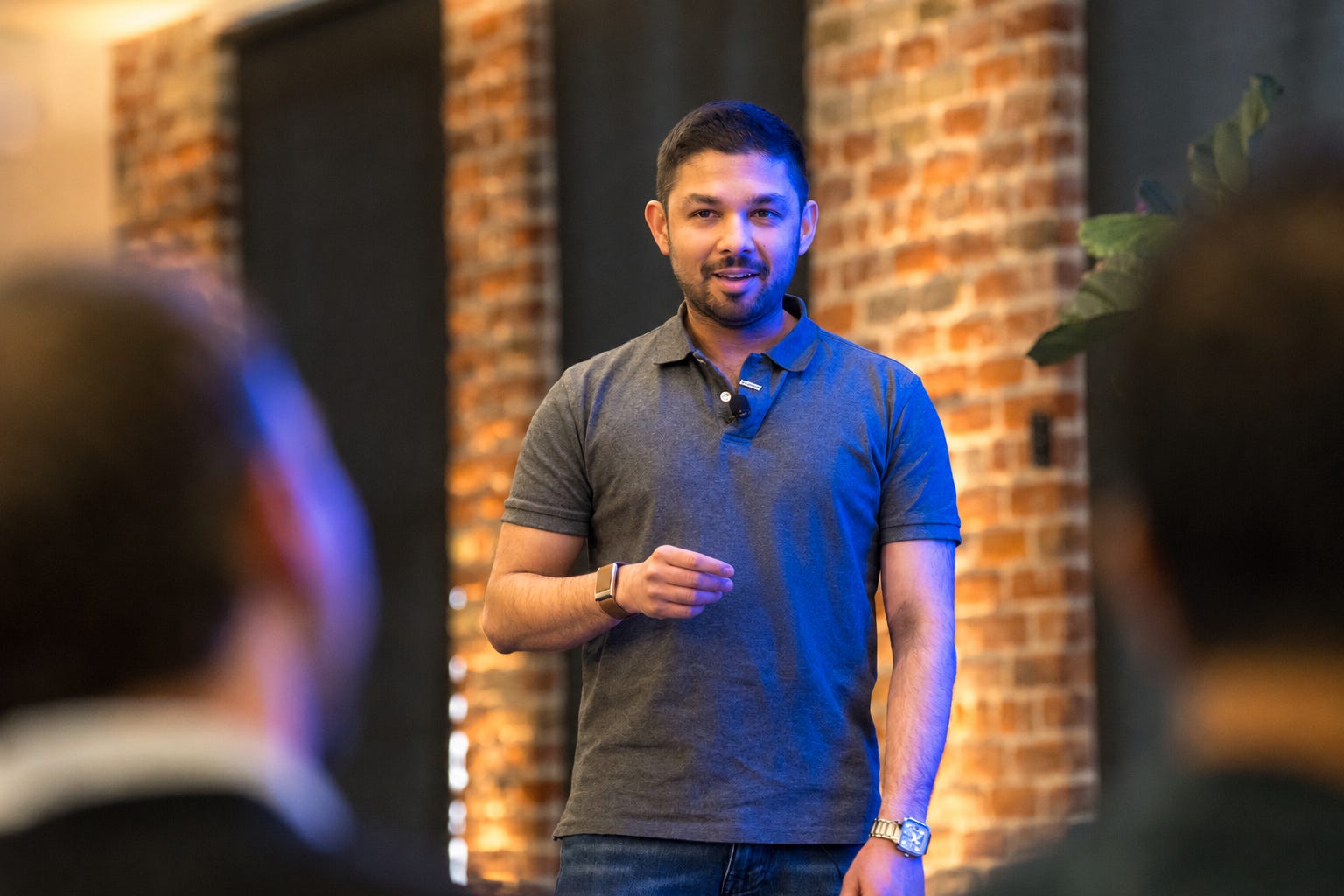
Last month, Squint CEO Devin Bhushan walked the manufacturing floor at Nailor Industries, a maker of commercial HVAC systems, in Houston.
While he was there, he heard about a key employee who, after many years of experience, could tell when the pH balance of the powder coating to be sprayed on its products was off. Without his learned skill, staff would have to regularly titrate and test, slowing the whole process down. Any vacation is stressful for everyone.
Such expertise, which doesn’t necessarily appear in a manual or official list of procedures, is what Bhushan calls “tribal knowledge.” And without such knowledge – across hundreds of skills, discontinued products and company-specific quirks – powerful AI software can’t help an industrial line much, he argues.
“You can’t plug robots in a Cheetos line and expect the robot to know how to debug quality issues when the Cheetos smell weird,” he says. “You have to create a context layer that brings everything together.”
That includes the tribal knowledge, but much more, too: all of a manufacturer’s work orders and asset history, the standard operating procedures (SOPs) it does have written down, as well as the regulations it’s mandated to follow. Only by combining it all can an AI model really understand what’s going on, and suggest how to fix or improve a situation on the ground.
Event update: Hello from London, where we just hosted a fun, tactical founder event with friend of Upstarts Alexis Gay – our third Tech Week event in 13 days after Boston and New York. We’ve been glad to see many of you readers, work with great partners, and spread the gospel of the Knicks.
If you’d like to partner with us on a future event, drop us a line.
Enter Squint, which today is raising its hand by unveiling an AI system that it says can beat comparable setups from Anthropic and OpenAI at solving complex industrial problems.
Built on a 2 billion parameter, open-weight small model fine-tuned for manufacturing, Squint’s system then went through multiple rounds of post-training on complex problems in the field. The company then benchmarked it against OpenAI’s File Search tool via their Assistants API; Vector RAG; and Claude Code. Each was tested for its ability to answer thousands of complex questions that would require the system to find and incorporate info from manuals, industry documents and other domain-specific sources.
The result: Squint’s latest system scored 78% multi-document accuracy, compared to Claude Code at 53%, Vector RAG at 47% and OpenAI File Search / Assistants at 46%.
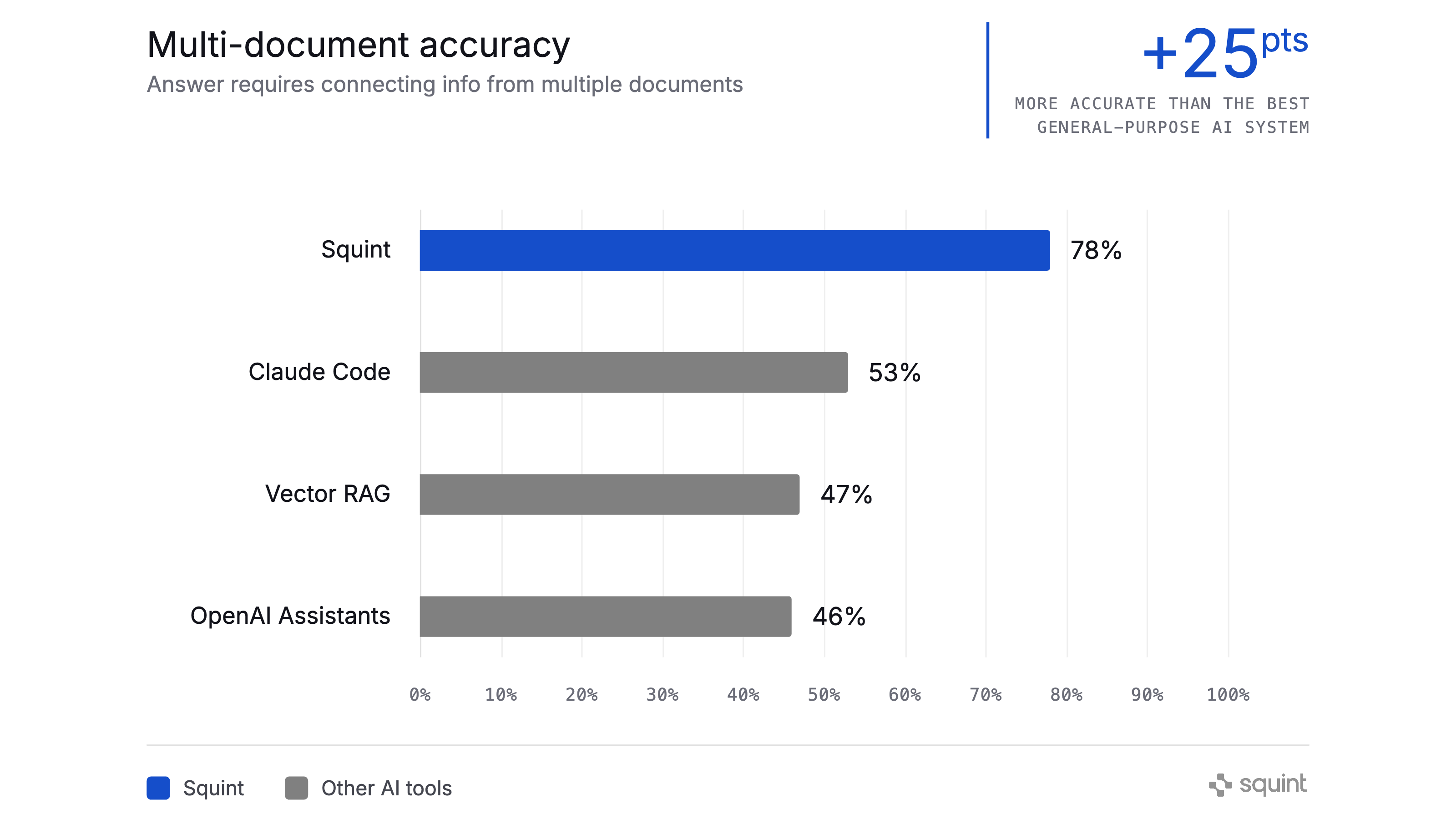
If 78% sounds like a lackluster C+ grade to you (or in the U.K. where we’re writing from today, a score of a “4,” where “1” is best), Bhushan explains that a single person, even an expert one, would likely fail the same test, scoring maybe 10% at best.
“These are questions that would be complex for a human to even attempt,” he tells Upstarts.
Of course, Squint has self-interest in sharing these results – and Bhushan freely admits that the company spent months post-training and refining Squint’s AI to work better.
But the startup, which raised $40 million in Series B funding last year in large part to hire toward, then build, these tools (TCV, The Westly Group, Sequoia and Menlo Ventures are all investors) says it’s not looking to beat Anthropic or OpenAI so much as it’s working to unlock real AI value for complex industrial customers.
“If OpenAI built a model for these knowledge gaps, we’d just use it,” Bhushan says. “It’s more a matter of making possible what hasn’t been possible.”
More on how Squint set up its AI; why Bhushan doesn’t think the model is the moat; and why both he and one of his big customers don’t see AI automating away industrial jobs below.
A MESSAGE FROM OUR SPONSOR
The modern ACH playbook

ACH remains the backbone of recurring and subscription payments for growing businesses — but outdated systems lead to increased friction, failed transactions and unnecessary costs.
Get the insights and learn how modern ACH helps payment leaders drive up to 15% higher conversion and 40% fewer returns.
AI for industry
When we first encountered Squint several years ago through Menlo’s Tim Tully, the startup’s product was focused on generating manuals and SOPs from filming a person performing a physical task, like running an espresso machine. Bhushan founded the company in 2021 after nearly four years at Splunk, where Tully was his boss; that business reached a customer count in the dozens.
But the bigger problem Bhushan was hearing involved the deeper institutional knowledge passed down by employees, that AI couldn’t learn from scanning a company’s orders, inventory and official processes.
When that knowledge was lost or left the building, it could take hours to manually check a process or find the right artifact with the answer. Sometimes, it would be cheaper for a production line to continue instead of stopping and having to restart; all of that product, like, say, rubber for tires, would be thrown away as a sunk cost.
Of course, many of these businesses pay for software, but Bhushan argues that current AI integrations were limited by their lack of wider context. A company might hook up ChatGPT to Microsoft SharePoint, for example, or use the tech giant’s Copilot AI tool; but limited by a large language model’s more generalized knowledge and limited access to the customer’s key info, they’d do little more than automate specific processes like tracking inventory or shipments, he says.
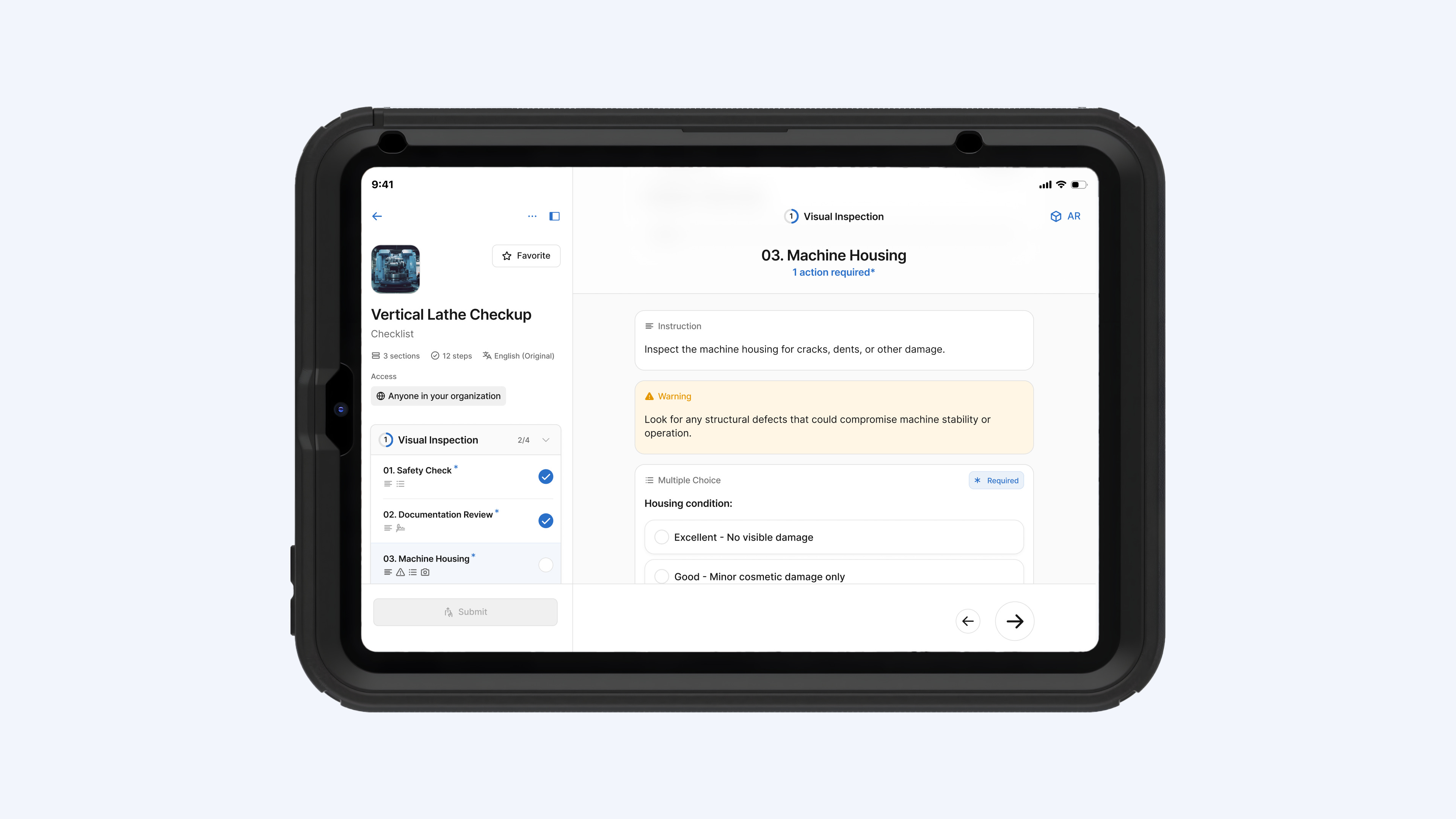
Squint’s solution is part AI, part software and part services. Using the system it’s just trained (and which it continues to improve now), it can learn and store the answer to such questions, and make recommendations over time.
Forward-deployed engineers can help the customer build workflows and apps on top that leverage the wider access to data. And over time, Squint will make it easier for customers with more technical chops to vibe-code their own apps and customizations, using Squint’s knowledge graph as their building blocks.
At Nailor Industries, chief information officer Joseph P. ‘JJ’ Jensen is working to update the tech stack of a fast-growing, family-owned HVAC business dating to the 1970s.
Like its peers, Nailor has benefitted greatly from the AI data center manufacturing rush, and it’s a land grab: any point of leverage can mean the difference in Nailor winning more contracts and scaling its facilities faster to meet the demand.
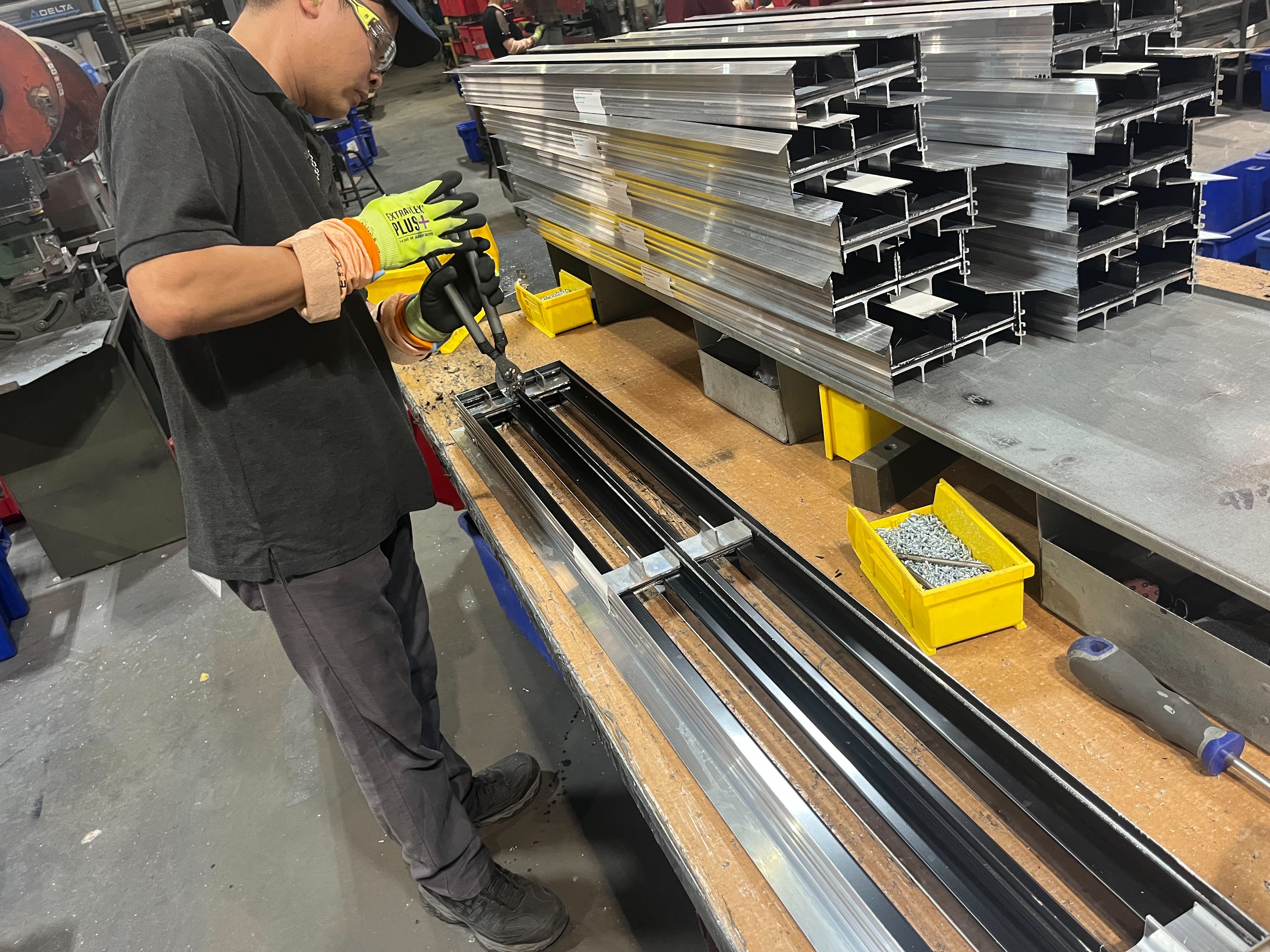
Nailor is trying to complete customer orders as much as 30% faster than bigger competitors, while working with more product SKUs than Costco, Jensen says. Just one newer unit might have as many as 61 serial numbers simply for its copper fittings for its coils. “That makes the complexity as you manufacture a bill of materials become very, very hard,” he says.
Squint has proven valuable, Jensen says, because it “shares the dirty laundry” of how the full factory floor operates, not just what’s in an SOP or documentation (for both of which it uses Squint, as well as for AR training and AI uses that he simply says will “surprise the industry”).
“We could strap GoPro cameras to employees right under their hat, on their safety glasses, and create valuable insights in real time.”
The vertical cliff
Whether Squint can truly capitalize on the gains its system is claiming will depend on customers like Nailor, and two questions immediately come to mind:
Why won’t the AI labs absorb this work?
Will workforces revolt against AI use on the floor?
On the first question, Bhushan compares Squint’s work to law, where both Harvey and Legora have quickly built large businesses working with law firms and corporations, leveraging models from Anthropic and OpenAI even as the labs invest in their own legal-focused products.
“The moat in the long run is not going to be that we have the best model system,” he argues. “It will be the app layer, the agent layer, and the workflows that run on top.”
Training its own system allows Squint a head start on the services and app-building side of things, Bhushan argues, meaning that the company can try to stay ahead of more services-focused businesses like Palantir that might need to produce a fully custom build.
At the same time, Squint’s business would be more efficient if it were leveraging affordable frontier models instead of having its internal AI team continually post-training, he adds. Building on top, Squint would hope its solution is better tailored to the industrial use case than ones pushed out by the labs, too.
With both Anthropic and OpenAI investing heavily in services operations, that’s a risky bet that a number of startups are currently making. On the jobs side, however, Jensen at Nailor agrees with Bhushan that employees aren’t currently threatened by using Squint.
The people whose expertise is being learned are typically “relieved,” he says. “They’re like, ‘You keep calling me on vacation anyway, in the middle of the night. So yeah, write it down. You’re not going to be as good as me.’”
If you believe in Squint’s business, its AI would necessarily be better eventually, though. At Nailor, Jensen says his company has more of a hiring crunch than a desire to reduce headcount. “We are clear with the staff that AI is not replacing their jobs, it’s here to make it easier,” he says. “So far, we haven’t received complaints.”
Squint’s CEO admits that if his solution continuously improves, it would necessarily surpass humans. But he argues that in practice, industry will continue to need human experts and craftspeople to work alongside the machines.
“It’s going to be a while before AI is fully automating lights-out facilities,” he says.
Industrial AI is where demo culture finally hits physics. The interesting question is not whether the model is smart enough, it is whether the workflow survives bad data, latency, and accountability.
Thanks for taking the time to share our story Alex!