


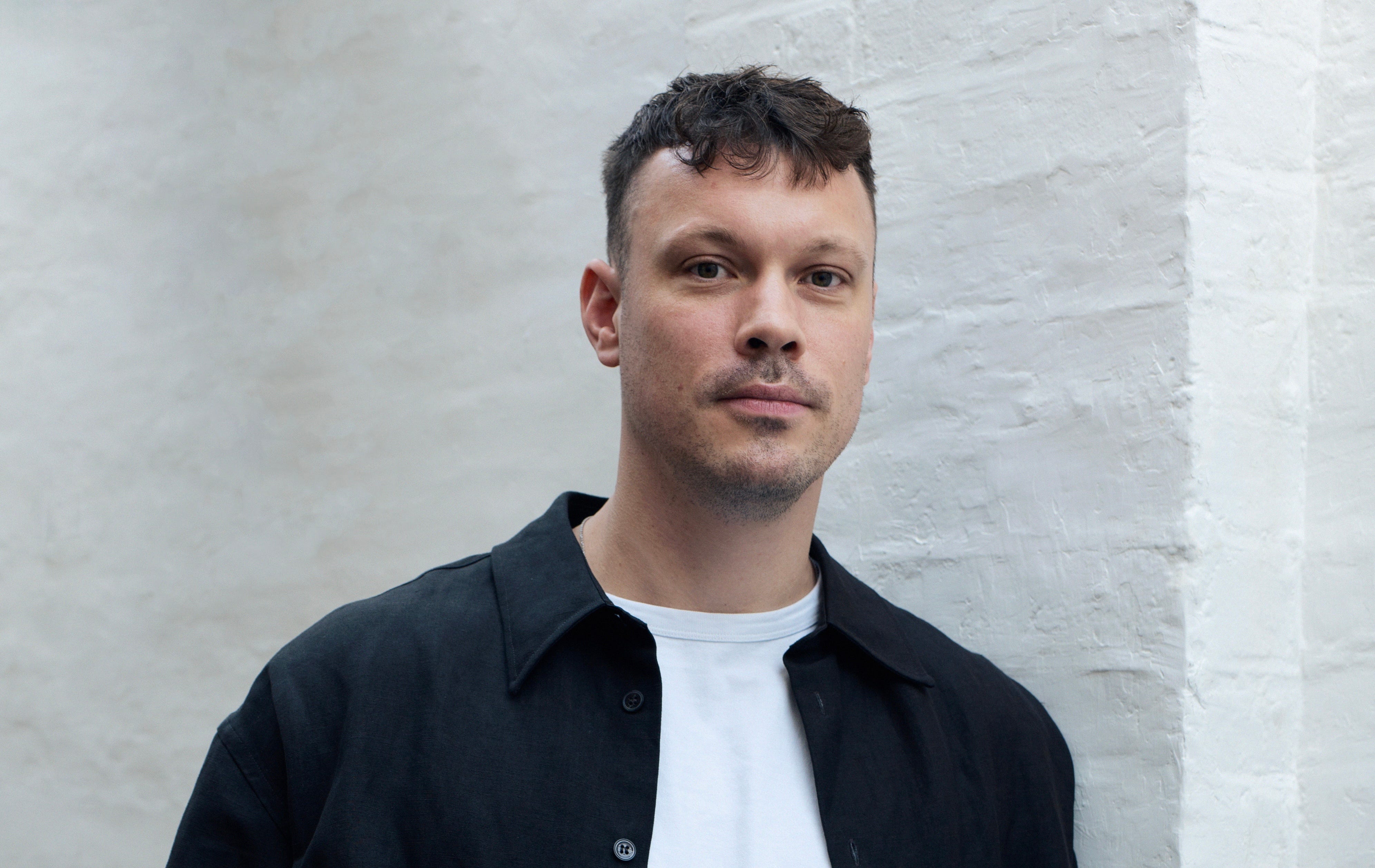
A few weeks ago, CEO Victor Riparbelli spoke with more than 700 of his employees at AI video startup Synthesia to ask them how they used AI internally.
What tool were they using the most, and how? What tool did they wish they had?
Only it wasn’t quite Riparbelli conducting the interviews. It was his AI avatar, from a new tool launched by his startup to conduct surveys on a user’s behalf. Riparbelli and his team set the basic questions, but the avatar followed each employee’s lead, tailoring follow-ups to how they responded.
“People generally gave very strong answers, and there was no pushback,” Riparbelli tells Upstarts as we meet ahead of the formal opening of Synthesia’s expanded New York office in mid-September. Outside the room, employees play ping pong among partially set-up desks. There’s a pervasive smell of fresh paint.
The survey tool is the second in a series of use cases that Synthesia plans to announce around its new platform called Sessions, which makes the AI-generated video avatars that Synthesia has offered customers for years into more interactive tools that can react and respond. Synthesia started with roleplaying – not in the gaming sense, but as a tool for rehearsing conversations and customer interactions.
(When Riparbelli came on The Upstarts Podcast – back with a new season next week! – in March, I noted how his demo’s salesperson feedback was pretty harsh.)
Surveys are more about collecting information faster and more effectively, both internally and with customers. “Let’s say I want to talk to 100 customers per week,” Riparbelli says. “I would love to do that, but my calendar doesn’t really allow me to do it.”
RSVP 📩: Upstarts is at SF Tech Week next week, and we’d love to see you. We’re hosting a founder lunch panel and Q+A with three great founders – Ivan Burazin of Daytona, Sara Du of Ando, and Nick Rudder of Sphere – alongside co-hosts Airwallex and Vanta on Tuesday, October 6.
We’re gearing this event toward early-stage founders and startup operators, and it’s free to attend. If you or someone you know would benefit, please apply to join us.
Tech CEOs love to scale themselves using more tech. But why is the experience better for the recipients, I immediately ask. Riparbelli gives two answers: convenience and depth. On the former, he argues that people would rather conduct a conversation on their own time – even one with an AI – versus type out written answers on a form. And because large language models power the tool, it can respond and ask deeper questions, versus a static questionnaire.
“There’s a lot of areas in business today where we set up meetings between two humans because we have to, right?” he says. “And a lot of that is actually because we want to avoid writing things.”
The roleplaying tool has proven popular so far, the company says, with 78% of learners attempting more than one roleplay, and 83% improving their score. (What did Synthesia learn from its AI survey? I asked the company in a follow-up, and will update this post if I hear anything concrete back.)
But these capabilities still raise bigger questions about where such tools can save people time and effort, and where they could accelerate new kinds of ‘workslop,’ or work-related AI spam. Riparbelli loathes slop himself, to the point he wrote his own op-ed about it in April.
Synthesia’s CEO says he draws a line at employees making surveys or sessions using his avatar without his knowledge, and concedes we will need to establish new norms for when it’s appropriate to lead with an avatar – say, for a first sales call that’s more about listing features and product requirements – versus when it’s not – such as a C-suite level conversation with a key customer.
“With a Zoom call, is it rude to have your camera off? It can be rude,” Riparbelli says. “Or it can also be okay, if you’re driving a car. There’s lots of societal and cultural things we’ll have to figure out.”
To get a feel for the frontier of this debate first-hand, I agreed to let Synthesia create an avatar for me while I was on-site. Staffers took photos of me making a few speech-worthy poses, recorded me reading a consent form, and then asked me to ramble into a mic for 90 seconds.
(They were surprised how easily I yapped, until finding out about our podcast – did I already mention it’s back next week, and you can subscribe on YouTube, Apple or Spotify?)
Below you can see a glimpse of the first-ever, and possibly last, Upstarts AI Reader Survey, generated from that avatar, plus a few past interviews I’ve conducted, and some basic questions I provided. You have to click the link to take the full thing, as interactive AI avatar surveys are shockingly not something that Substack has integrated in one day.

I’ll be curious how you all respond, and what you think about the experience, so please let me know if you go through with it.
And for paid subscribers, I’m sharing a few more insights below from Riparbelli including:
Why he’s bullish on NYC
Why he’s bearish on AI assistants as “productivity theater”
What societal guardrails he welcomes
How this could change our meetings soon
Want to read the rest of this interview? Subscribe for free and log in to unlock this post as your monthly preview, or take 15% off a paid subscription as part of our Fall Sale.