


Vanta CEO Christina Cacioppo won’t take the bait.
Within the wonky world of corporate governance, and compliance audits, her startup is a big deal. Founded in 2018, Vanta works with more than 16,000 customers today, including tech darlings Factory, Lovable and Ramp; it reached a $4.2 billion valuation last July.
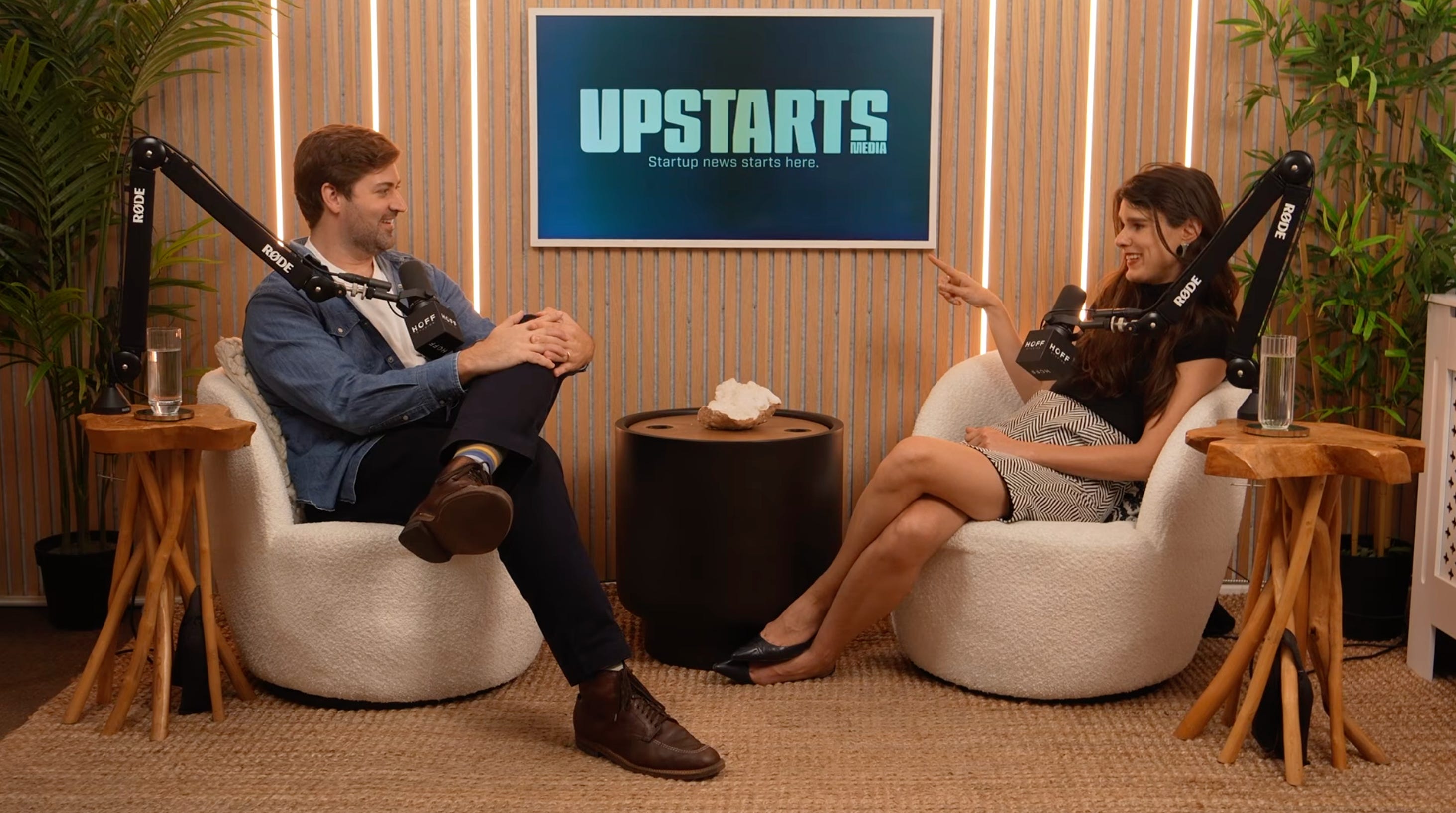
And so the startup once dismissed by VCs as too niche now has to fend off a pack of startups that nip at its heels. Sometimes, they make bold claims about Vanta being outdated. Sometimes, they erupt in scandal.
Cacioppo’s been doing this now for too long to break discipline and call them out by name. But glimpses of her competitive side flash throughout our conversation on our latest episode of The Upstarts Podcast.
A contrast to “newer, and now defunct, entrants in the space” who, like Vanta, had to “fake it ‘til you make it” early on, but, unlike Vanta, “also just didn’t do the work” to make customers compliant. A comparison of business software in 2026 to crypto in 2021 when it comes to chasing hype. A quip that any rivals “have to actually do compliance this time” to pose a threat.
Vanta’s CEO only jabs. She doesn’t name names. I ask Cacioppo if it’s intentional. It is: a lesson in not fanning the flames that even some of tech’s biggest companies, like Sam Altman’s OpenAI, don’t always seem to remember.
“I think I subscribe to the ‘never let them see you blink’ school of thought,” she tells me. “Maybe I have to blink somewhere else, but… Yeah. That’s not here.”
Event alert: I’m thrilled to be teaming up with my friend, the talented comedian Alexis Gay. for ‘Startups Unscripted’ – a night of pitches, jokes and startup storytelling – in London on Wednesday, June 10. Apply here.
Through my work co-creating and managing the Cloud 100 franchise for Forbes, I got to know Cacioppo fairly early in her journey, and covered Sequoia’s investment in Vanta back in 2021.
Drawing upon that history – including reading back a favorite quote to her – allowed for one of my favorite podcast conversations so far. (Disclosure: Vanta has partnered with Upstarts on some of our events.)
We cover Cacioppo’s founder journey – the real story, not the neater, widely-told one – as well as how Vanta turned to “cringe” LinkedIn posting and a higher bar for good business hygiene to take off with customers. Plus, we get into her Upstart Moment: rethinking, and future-proofing, Vanta’s software business for the AI era.
“I still think, in 2026, that software can do great things for the world,” she says. You’d think that wouldn’t be a hot take. But with recent AI mania, it’s pretty warm.
Below, we’ll dive into my three favorite lessons from the episode, in Cacioppo’s own words.
A MESSAGE FROM OUR SPONSOR
Uncover insights. Take action.

Rippling AI unlocks deep business insights, builds reports instantly, and runs complex actions across your startup — all powered by your live workforce data and permissions.
If you’re enjoying the show, please help us grow:
Forward this to other founders and builders you think will enjoy it.
Tell us great startup leaders you’d like us to interview next.
Startup lesson 1: The changing valuation game
It has to be a bit strange to be a founder like Cacioppo who, after years of scaling and building a real business, has earned a valuation that a decade ago would’ve been one of tech’s largest, and now is smaller than some AI labs achieve without a product.
When I read back to her that quote from 2021 – “If you confuse financing success with company-building success, you’ll only get one of those things” – she stands by it.
”Raising money and having some smart private market investor put a private valuation is really cool and feels good, and kind of doesn’t mean more than that. One person decided to wake up that morning and pay that price for your company.”
Cacioppo “lives in a glass house” saying this, she notes. But she says she still believes in what CEOs like her former boss Drew Houston at Dropbox, and Figma CEO Dylan Field, have said about the public market “enforcing a different rigor” on a business in a healthy way.
In this moment, though, she admits that the buzz of chasing big numbers can matter more than she would’ve liked to previously admit.
“There’s a hype cycle game that sometimes works. And one model someone gave me was B2B software, AI whatever, in 2026 is much more like crypto in 2021, than [it is like] B2B in 2021. The hype matters. The hype goes into the next round. When you have that round and you have the valuation, you get more investors, you get more customers, you get more employees.
Hopefully, then, you’re using that to build real things, and rinse and repeat. But there is a hype ‘fake it ‘til you make it’ game that I think can work. And I think we probably both know of strong companies that have played that well. We also probably know of some less strong companies that are playing, or going to play that, into a wall. But, yeah, I don’t think it’s as clear which works better in the long term as it used to be.”
Leveraging LinkedIn cringe
Over the course of building Vanta, Cacioppo says that she’s seen the distribution advantage that was once the realm of consumer companies (like Snapchat vs. Facebook) move over into business software.
“If somebody is out-distributing you with a reasonably good product, that is tough.”
Vanta’s approach to distribution: ship as fast as possible, and post about it. “There was a period where I felt like I was, I joke, but I was the launch PMM [product marketing manager] of just posting on LinkedIn: “Here’s one new ship, one new thing we launched.”
“I do think LinkedIn is easier than Twitter, because LinkedIn, it’s just cringe. I’m just hashtag crushing it, and the ‘I’m hiring’ banner. You know? It’s so, so silly. But I think for us it was those two things, and so we did have to increase velocity of some of the things we were delivering to our customers, and then we just had to talk about them constantly.”
An easy proxy for how automated Vanta was becoming was how many integrations it pushed. Today it has more than 400. But when it had 80, Cacioppo pushed the team to add another 100 in a year as part of project ‘Infinite Integrations.’ They reached just under 300.
“The team initially was like, ‘This is crazy, Christina is, you know, politely psychotic. There’s no way we can do this.’ And that was good: be the right amount of unreasonable. Being like, ‘nope, I think you can,’ and we could sit down and talk about it and be supportive. And then we just blitzed through, and emoji-posted on LinkedIn constantly about new integrations and what the number was, and how fast we were moving, and how the rate month-over-month was increasing.
And it built this narrative of, ‘Wow, Vanta moves so fast, and is so much more automated. Their competitors, why would you use one of those?’”
Managing ‘infinity work’
Cacioppo and her co-founder both worked at Dropbox before Vanta, and she name-checked co-founder Houston in our conversation about public valuations. I knew I wanted to bring up Houston again, but for a different reason.
I’ve long been fascinated by startup founders who stubbornly commit to work on the same business well after they could’ve taken a curtain call. Aaron Levie co-founded Box in 2005, took it public a decade later and still runs it today. Brian Chesky, who co-founded Airbnb in 2007, landed a 2020 IPO and is still in charge. Houston co-founded Dropbox the same year, took it public in 2018, and has run the business throughout.
But last month, Houston finally announced a plan to transition out of the CEO role, reportedly to build something new in AI. Chesky seems to be doing similar, per a Bloomberg report, although he may stay in charge at Airbnb.
I was curious: does Cacioppo aspire to a 20-year run at Vanta? Even as an 8-year-old company, it’s already straddling multiple tech eras. What keeps her motivated?
“There’s always problems. Half the things are always broken, all the time. But one of the things I feel very grateful for, amongst many, is that the stuff that’s broken generally changes, and the problems generally change. And I find it interesting and rewarding when you solve them.”
Cacioppo says her hardest times working at Vanta have been when she faced the same problems over and over, without that change, but without a solution.
“You’re like, ‘I’ve tried seven things, maybe I could try an eighth? But this is still the problem.’ To me, that’s when fatigue, burn-out sets in.”
To handle “infinity problems,” Cacioppo leans on frameworks. One is to prioritize that “done” is more important than “perfect.”
“Just pick, figure out how you’re going to filter them. Maybe it’s right, maybe it’s wrong. Pick one, and move, and you will learn as you’re going.
I think that about decision-making, I think that about product development. Movement is so much better than trying to figure out what to do. Because that’s when fatigue, and craziness, sets in.”